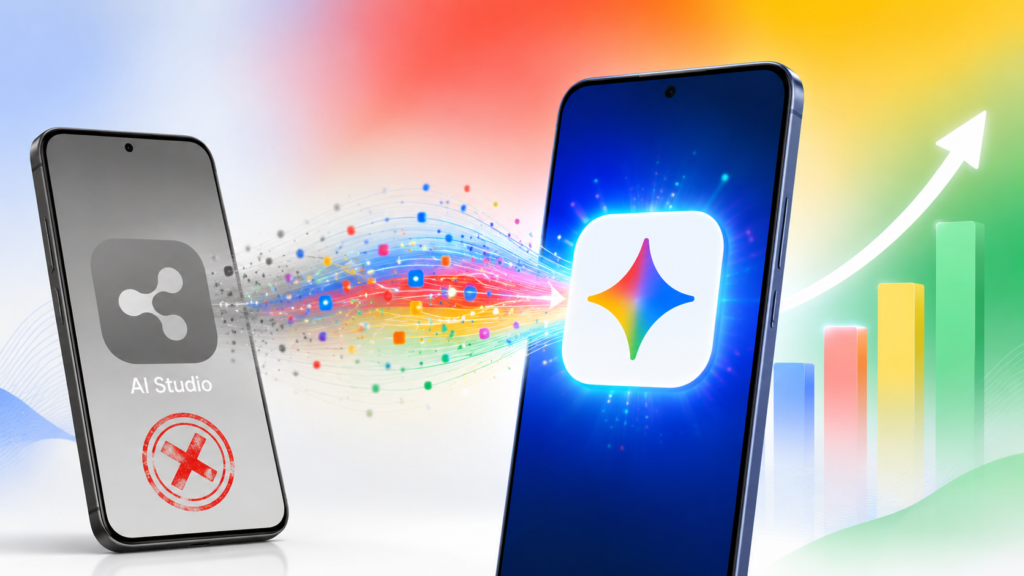
Why Gemini 3.5 Pro Took 3 Months Longer Than Google Promised :- Every tech company slips a deadline occasionally. But three missed launches for the same model, stretched across an entire summer, is a different kind of story — one that says less about bad luck and more about what happens when a company hits a genuine engineering wall in public. Gemini 3.5 Pro’s road to release has become a case study in exactly that. Here’s what actually happened, month by month, and what it tells us about the pressure frontier AI labs are under right now.

The Promise That Started the Clock
Everything traces back to a single moment on stage. At Google I/O on May 19, 2026, Sundar Pichai looked out at a room of developers who had shown up specifically to see Gemini 3.5 Pro, and told them: “Give us until next month to get it to you.” That line — delivered with confidence — is what set expectations for a June launch, and it’s also the line that made every subsequent delay feel more public than it might have otherwise.
At that same event, Google only shipped Gemini 3.5 Flash, describing the Pro model as “already being used internally” and expected to roll out shortly after. That framing — real, working, just not quite public yet — would repeat itself, almost word for word, for the next several months.
Month One: The Quiet Slip
June arrived, and nothing did. There was no dramatic announcement of a delay — just an absence. The promised “next month” simply passed without the model appearing, and Google’s own Pro model page continued to show Gemini 3.1 Pro as the current flagship, with a “3.5 Pro coming soon” badge sitting above it.
This first slip didn’t generate much alarm on its own. Software delays happen, and Google had at least been transparent that the model was still being refined. The bigger story was still ahead.
Month Two: The Real Reason Starts to Surface
By July, actual reporting began to explain why the model wasn’t showing up. According to Bloomberg, Google was taking extra time specifically to improve Gemini 3.5 Pro’s coding performance, after early testing produced disappointing results. In late June, engineers reportedly updated the training data specifically to try fixing those coding weaknesses — and the results were still unsatisfying.
This is the point where the story shifted from “a bit delayed” to “something is actually wrong.” A missed deadline caused by polishing is normal. A missed deadline caused by a training-data intervention that didn’t work is a sign of a deeper problem.
That deeper problem eventually came into focus: Google DeepMind reportedly scrapped its original base model entirely, after engineers discovered structural failures in recursive tool-calling and SVG generation. In plainer terms, the model was breaking down on tasks that required it to call tools across multiple steps in a chain, and on tasks involving generating scalable vector graphics — both increasingly important for the kind of “agentic” AI behavior every major lab is racing to deliver in 2026. You can’t patch a structural failure like that with a quick fine-tune; you have to rebuild.
The July 17 Target — And Its Failure
A specific date crystallized public attention around mid-July: July 17, 2026. It wasn’t officially confirmed by Google, but it circulated widely enough that prediction markets assigned it a real probability — Polymarket reportedly had it around 62% likely to happen on schedule, fueled partly by sightings of the model’s internal slug on Google Cloud servers for weeks beforehand.
It didn’t happen. Bloomberg reported the release was delayed again after the model fell short of Google’s own internal quality benchmarks — this time specifically around hallucination rates and real-world reliability, not just coding. That made it three confirmed slips from the original June target, each one revealing a slightly different underlying issue.
Month Three: Filling the Gap Without Filling the Promise
Rather than let the delay sit in total silence, Google kept shipping smaller updates throughout this stretch — a move that arguably softened some criticism while also underscoring how far away the actual flagship still was. On July 21, 2026, the company released three new models at once: Gemini 3.6 Flash, Gemini 3.5 Flash-Lite, and Gemini 3.5 Flash Cyber.
Gemini 3.6 Flash was positioned as Google’s “workhorse model,” promising improved coding, knowledge work, and multimodal performance while cutting token usage by up to 17% compared to its predecessor. Gemini 3.5 Flash-Lite targeted the most cost-sensitive segment of users. Gemini 3.5 Flash Cyber, a specialized model fine-tuned specifically for finding and fixing cybersecurity vulnerabilities, was kept in a limited access pilot exclusively for governments and trusted partners rather than released broadly.
None of these were the model developers were actually waiting for — but they did keep Google’s release cadence visible during a stretch that could otherwise have looked like total stagnation.
Why the Timing Made Everything Worse
Delays are always more painful when competitors are moving. And this delay landed in an unusually crowded stretch of the AI calendar. The same week Gemini 3.5 Pro was originally rumored to arrive, OpenAI launched GPT-5.6 in Sol, Terra, and Luna variants, alongside a new ChatGPT Work product aimed squarely at professional users. Grok 4.5 opened to the public that same day. DeepSeek’s V4 family was separately targeting a stable release around the same window.
Even smaller players added pressure. Moonshot AI’s open-weight Kimi K3 model took the top spot on major coding benchmarks during this period — the exact category where Gemini 3.5 Pro was reportedly struggling — and pulled in so much demand that Moonshot had to pause new subscription signups entirely. Every one of these releases chipped away at how much runway Google had to quietly rebuild without falling further behind in public perception.
What This Delay Actually Reveals
Step back from the specific dates, and the more interesting story is what this saga says about frontier AI development in 2026. The issues Google reportedly ran into — recursive tool-calling failures, SVG generation breakdowns, elevated hallucination rates — aren’t cosmetic bugs. They’re the kind of structural weaknesses that show up specifically when you push a model toward more autonomous, agentic behavior: acting across multiple steps, using tools, generating precise structured outputs.
That suggests the bar for what counts as a “finished” flagship model has quietly gotten much higher. A model that answers questions well but breaks down on multi-step agentic tasks isn’t good enough anymore — and Google apparently decided that shipping on time mattered less than shipping something that actually held up under that higher bar. Whether that judgment call was the right one will really only be answered by how Gemini 3.5 Pro performs once real-world usage puts it through exactly the kinds of tasks that broke the earlier version.
Conclusion
Three months, three missed deadlines, and one scrapped base model later, Gemini 3.5 Pro’s delay says less about a company falling behind and more about the widening gap between “impressive demo” and “reliable agentic tool.” Google chose to rebuild rather than ship a version it didn’t trust, even while competitors filled the silence with their own major launches. That’s a defensible bet — but it’s also one that came at a real cost in momentum and public confidence, and it’s a pattern other AI labs chasing similarly ambitious agentic capabilities should expect to run into as well.
Read More :- Gemini 3.5 Pro Finally Launches After 3 Delays — What Changed
FAQs
Q1: What was the original release date Google promised for Gemini 3.5 Pro?
Google originally targeted June 2026 for release, based on Sundar Pichai’s comments at I/O on May 19, 2026, when he told developers to expect the model “next month.”
Q2: What specific technical problems caused the delays?
Reports pointed to structural failures in recursive tool-calling and SVG generation, along with elevated hallucination rates and reliability issues discovered during internal testing, which led Google DeepMind to scrap and rebuild the original base model.
Q3: Did Google release anything while Gemini 3.5 Pro was delayed?
Yes. Google released Gemini 3.5 Flash at I/O in May, followed by Gemini 3.6 Flash, Gemini 3.5 Flash-Lite, and a specialized Gemini 3.5 Flash Cyber model for cybersecurity tasks during the delay period.
Q4: How did competitors respond while Gemini 3.5 Pro was delayed?
OpenAI, xAI, DeepSeek, and Moonshot AI all shipped major model releases during the delay window, including GPT-5.6, Grok 4.5, DeepSeek’s V4 family, and Kimi K3, adding competitive pressure on Google during the extended wait.