Every once in a while, an AI model launch actually breaks the usual trade-off between quality and cost — instead of forcing you to pick one, it delivers both. That’s exactly what Google just did with Nano Banana 2, its newest AI image generation model, which somehow manages to match the quality of Google’s premium image tool while cutting the price nearly in half.
Here’s a full breakdown of what Nano Banana 2 actually is, what makes it different, and why it matters for anyone who creates images with AI.

What Nano Banana 2 Actually Is
On February 26, 2026, Google DeepMind officially launched Nano Banana 2, technically named Gemini 3.1 Flash Image, with the API identifier gemini-3.1-flash-image-preview. The playful nickname is the consumer-facing name Google uses across the Gemini app, its DeepMind product pages, and marketing materials, while the official technical name reflects its place within the broader Gemini 3.1 model family.
In simple terms, Nano Banana 2 serves as the high-efficiency counterpart to Gemini 3 Pro Image, built specifically for speed and high-volume use cases rather than the slower, more resource-intensive processing that premium image models typically require. It provides high-quality image generation and conversational editing at a mainstream price point and low latency, meaning it’s designed to be fast and cheap enough for everyday production use, not just occasional showcase projects.
Why This Launch Is a Bigger Deal Than It Sounds
The real story here isn’t just that Google released another image model — it’s what this particular model manages to pull off. Nano Banana 2 collapses a cost-and-performance gap that has kept high-quality AI image generation out of many production pipelines since Nano Banana Pro launched in November 2025. Historically, businesses had to choose between affordable-but-mediocre image generation or expensive-but-excellent output. Nano Banana 2 is being positioned as the rare exception that offers both.
The pricing numbers back that claim up clearly. Nano Banana 2 launched with pricing starting at $0.045 per image, roughly 50% cheaper than Nano Banana Pro and its closest competitors. On the standard Gemini API, output is billed at $60 per 1 million tokens, which breaks down to roughly $0.067 per 1K-resolution image, $0.101 per 2K image, and $0.151 per 4K image — with the Batch API offering an additional flat 50% discount on top of those rates.
Independent evaluation backs up the quality claims too. Within hours of launch, independent benchmarks placed the model at #1 in Text-to-Image on the Artificial Analysis Image Arena, a blind human evaluation leaderboard, at roughly half the API price of its own predecessor. The model currently holds the #1 ranking on both Arena and Artificial Analysis benchmarks, placing it ahead of established competitors like DALL-E, Midjourney, and FLUX in third-party quality evaluations.
What’s New Under the Hood
Beyond the headline price-to-quality ratio, Nano Banana 2 brings several genuinely useful technical improvements over earlier models.
Live web search grounding. The model can retrieve live visual reference data from Google’s search index at the moment of generation, which allows it to render lesser-known landmarks, brand-specific objects, and recent real-world subjects far more accurately than models relying purely on training data. This matters a lot for anyone generating images tied to current events, specific real products, or less commonly photographed locations.
Configurable thinking levels. Nano Banana 2 introduces Minimal and High thinking modes, letting the model reason through complex prompts before actually rendering an image. This gives users a practical trade-off: faster output for simple requests, or deeper reasoning for prompts with multiple specific requirements that need to be balanced correctly.
Expanded resolution and format options. The model supports output ranging from 512p resolution up to 4K, along with new aspect ratio options including ultra-wide formats, giving creators far more flexibility depending on where the image is ultimately going to be used.
Stronger consistency and text rendering. Google’s product claims emphasize improved multilingual text rendering inside generated images, along with multi-subject consistency supporting up to 5 characters and 14 objects within a single generated scene — a common pain point for earlier image models that would distort faces or objects when a scene got visually complex.
Where You Can Actually Use It
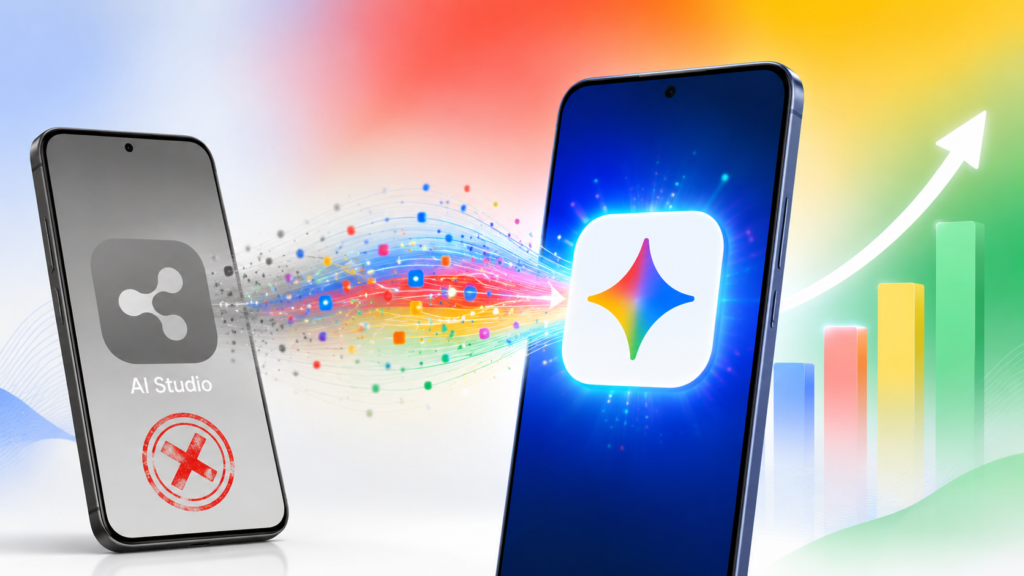
Google didn’t treat this as a quiet, experimental rollout. Nano Banana 2 launched simultaneously across the Gemini app, Google Search’s AI Mode, Google Lens, Google Ads, and the AI filmmaking tool Flow, with additional availability in preview through AI Studio, the Gemini API, and Vertex AI. That breadth of same-day availability signals Google’s confidence in the model, rather than a cautious, limited test rollout.
Notably, Google has already begun replacing Nano Banana Pro with Nano Banana 2 across the Gemini app, which is a strong signal that this isn’t meant to be a side experiment — it’s meant to be the new default going forward. Inside Flow specifically, the model is available at zero credit cost for all users, a detail that particularly benefits content teams building video workflows, since it effectively removes the cost barrier for image generation within that specific tool.
Who Actually Benefits From This Launch
The practical implication of Nano Banana 2’s pricing is significant for anyone producing images at real scale. Nano Banana Pro was well-suited for high-value, low-volume use cases — think a handful of polished hero images for a campaign. Nano Banana 2’s pricing makes it viable for e-commerce catalogs, automated social media pipelines, localized campaign variants, and any application generating hundreds of images daily, use cases where Pro-level pricing simply didn’t make financial sense before.
For everyday users, the shift is simpler to describe: better-looking, more accurate AI images, faster, and without needing to think carefully about cost before generating them.
Read More :- Why Gemini 3.5 Pro Took 3 Months Longer Than Google Promised
Conclusion
Nano Banana 2 is a rare kind of AI release — one where a newer, cheaper model doesn’t ask users to compromise on quality to get the lower price. By pairing Pro-level image quality with Flash-tier speed and cost, Google has effectively made high-quality AI image generation accessible for production-scale use cases that previously couldn’t justify the expense. Combined with genuinely useful additions like live search grounding and configurable reasoning depth, Nano Banana 2 looks less like an incremental update and more like Google resetting the baseline for what a mainstream AI image model should be able to do.
FAQs
Q1: What is Nano Banana 2’s official name?
Nano Banana 2 is the consumer-facing nickname for Gemini 3.1 Flash Image, Google’s newest AI image generation and editing model, with the API model ID gemini-3.1-flash-image-preview.
Q2: How much does Nano Banana 2 cost compared to Nano Banana Pro?
Nano Banana 2 starts at around $0.045 per image, roughly 50% cheaper than Nano Banana Pro, while matching or exceeding its predecessor’s output quality according to independent benchmarks.
Q3: Where can I use Nano Banana 2?
Nano Banana 2 is available across the Gemini app, Google Search’s AI Mode, Google Lens, Google Ads, the Flow filmmaking tool, and in preview through AI Studio, the Gemini API, and Vertex AI.
Q4: What are the biggest new features in Nano Banana 2?
Key additions include live Google Search grounding for more accurate real-world image generation, configurable thinking levels for handling complex prompts, expanded resolution options up to 4K, and improved multi-subject and text-rendering consistency.