Security operations centers are drowning in alerts, logs and fragmented security signals. Proofpoint is now using an AI agent to tackle one of the most time-consuming parts of the problem: figuring out what those signals actually mean.
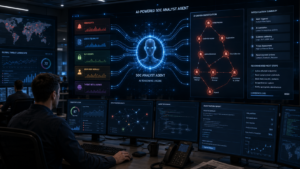
On September 3, 2026, Proofpoint introduced its SOC Analyst Agent, an agentic AI capability designed to investigate security threats across Proofpoint’s security data and turn natural-language questions into structured findings and recommended next steps.
The new agent is also the first Proofpoint capability to emerge from the company’s work with OpenAI’s Daybreak Defense Network, bringing OpenAI’s cyber-focused models into Proofpoint’s security investigation workflows.
But there is an important limitation: the agent is designed to recommend actions, not independently execute consequential security changes.
That human-control boundary is central to how Proofpoint says it wants organizations to deploy agentic AI in security operations.
What Is Proofpoint’s SOC Analyst Agent?
The SOC Analyst Agent is an AI-powered security investigation system built by Proofpoint’s Applied Services team.
Instead of requiring analysts to manually search different dashboards, write queries and correlate individual alerts, the agent allows security teams to describe an investigation in natural language.
The agent then plans the investigation, retrieves relevant information from connected Proofpoint security products and produces a structured finding with context and a recommended next step.
The goal is to reduce the manual work between an initial alert and an analyst’s final decision.
Proofpoint describes the problem as a prioritization challenge rather than simply a data shortage.
Security teams already have enormous amounts of information. The challenge is determining which signals matter, how they connect and what should happen next.
OpenAI Daybreak Models Power the Cyber Reasoning
One of the most notable aspects of the launch is its connection to OpenAI’s Daybreak Defense Network.
Proofpoint says Daybreak models are designed for authorized defensive cybersecurity work and can provide specialized reasoning around attacker behavior and intent.
That matters because security investigations often require analysts to understand how an attacker might construct a lure, move data, evade controls or combine individually harmless actions into a larger attack sequence.
Proofpoint argues that this type of reasoning is different from simply asking a general-purpose AI model to summarize logs.
The SOC Analyst Agent combines:
- Proofpoint’s security expertise
- Proofpoint’s security telemetry
- OpenAI Daybreak cyber reasoning
- Agentic investigation workflows
- Human review and approval
The result is intended to move analysts from raw alerts toward a defensible explanation of what happened.
How the SOC Analyst Agent Works
A security analyst can ask a question or describe an investigation using natural language.
The agent then plans the investigation and pulls relevant context from connected Proofpoint data sources.
These can include:
- Security alerts
- Logs
- Data loss prevention events
- User risk signals
- Other connected security information
Instead of manually switching between multiple consoles, analysts can receive the relevant information in a single investigation workflow.
The system then produces a structured finding that analysts can review.
Importantly, Proofpoint says findings are traceable back to the underlying source data, allowing analysts to validate how the agent reached its recommendation.
The Agent Can Run Investigations on a Schedule
Proofpoint is not limiting the system to interactive questions.
Teams can configure recurring workflows for activities such as:
- Threat hunting
- Data-security investigations
- Escalation reporting
- Recurring security analysis
Results can then be routed to the analysts responsible for handling them.
For example, a security team could configure a nightly threat-hunting investigation or a daily escalation report.
This changes the model from an AI assistant that waits for a question into something closer to a persistent security-analysis worker.
Proofpoint Is Keeping Humans in Control
Despite the agentic architecture, Proofpoint is deliberately limiting what the system can do.
The SOC Analyst Agent does not independently disable accounts, contain threats or make other consequential remediation changes.
Instead, it produces findings and recommended next steps.
A human analyst must review and initiate actions such as account changes or containment.
That distinction is particularly important in cybersecurity.
An AI agent that incorrectly interprets a security event and automatically disables an employee’s account, deletes data or blocks legitimate infrastructure could cause significant operational damage.
Proofpoint’s approach therefore separates:
AI reasoning → recommendation → human decision → action
rather than:
AI reasoning → automatic remediation
Why a Cybersecurity-Specific AI Model Matters
Proofpoint argues that security investigations require a particular type of reasoning.
An analyst may need to understand what an attacker was trying to accomplish rather than simply identify whether an individual event looks suspicious.
For example, several ordinary-looking actions might collectively indicate:
- Credential theft
- Data staging
- Insider activity
- Exfiltration
- Phishing
- Account compromise
A cyber-focused model can potentially help connect those individual signals into a broader investigation.
Proofpoint says this is one reason it chose to integrate OpenAI’s cyber-tuned Daybreak models rather than relying exclusively on a general-purpose frontier model.
The Agent Was Built From Proofpoint’s Own SOC Experience
The SOC Analyst Agent did not begin simply as a conventional software feature.
Proofpoint says its Applied Services team, which investigates and responds to incidents for customers, built the agent to accelerate its own workflows.
The problem was practical: analysts needed to move faster from raw alerts to a clear and defensible next step without repeatedly switching between tools or writing new queries.
Proofpoint is now making that workflow available to customers through the SOC Analyst Agent.
That gives the product a different positioning from an experimental AI assistant: it is designed around an existing security-operations workflow.
What Security Teams Can Expect
For SOC analysts, Proofpoint says the console itself does not have to fundamentally change.
Instead, the workflow changes.
Rather than manually constructing queries and collecting information from multiple locations, an analyst can ask the agent what they want to investigate in natural language.
For security leaders, scheduled investigations could provide another benefit.
Instead of relying on analysts to remember to generate recurring reports, an agent can run the investigation automatically and route the result to the appropriate people.
And because findings can be traced back to source data, analysts can inspect the evidence behind the recommendation rather than simply accepting an AI-generated conclusion.
Availability
The Proofpoint SOC Analyst Agent is currently in private preview with select beta customers.
Proofpoint is targeting general availability by the end of Q3 2026, subject to its normal product rollout process.
The initial private-preview focus includes data-security areas such as:
- Email DLP
- Insider threat management
- Cloud DLP
Proofpoint says additional product support is expected to follow.
Why This Launch Matters for AI Cybersecurity
The launch illustrates a broader change in enterprise AI.
Companies are moving beyond AI systems that simply answer questions and toward agents that can plan multi-step tasks, gather information and produce actionable recommendations.
Cybersecurity is one of the areas where that shift could have particularly large effects.
SOC analysts routinely perform repetitive investigative work:
- Review an alert.
- Gather additional context.
- Search logs.
- Correlate events.
- Determine likely intent.
- Decide what deserves escalation.
- Recommend a response.
An agent can potentially automate much of that investigative chain while leaving the final decision to a human.
That could allow experienced analysts to spend more time on complex incidents rather than repetitive data gathering.
The Bigger Trend: AI Agents Are Becoming Security Workers
Proofpoint’s launch is part of a larger movement toward agentic cybersecurity.
The next generation of security tools is increasingly being designed around AI systems that can investigate, reason across multiple data sources and continuously monitor for patterns.
But the launch also highlights an important industry debate.
The more autonomy AI receives, the greater the potential efficiency—and the greater the consequences when the system makes a mistake.
Proofpoint’s decision to keep consequential actions behind human approval reflects that tension.
The company is effectively arguing that AI should handle more of the investigation, while humans retain control over the decision and response.
The Bottom Line
Proofpoint’s SOC Analyst Agent represents a significant step toward AI-powered security operations.
By combining Proofpoint’s security data and expertise with OpenAI Daybreak’s cyber reasoning capabilities, the company wants to help analysts move from fragmented alerts to structured investigations much faster.
The most important part may be what the agent doesn’t do.
It does not independently disable accounts, contain threats or execute other consequential remediation. Instead, it investigates, explains and recommends—while a human remains responsible for the final action.
If Proofpoint can scale that model successfully, the SOC of the future may not eliminate human analysts.
Instead, AI agents could become the investigative layer that lets those analysts focus on the decisions that matter most.
Read More:- US and China Prepare for AI Safety Talks as AI Risks Escalate
FAQ
What is Proofpoint’s SOC Analyst Agent?
Proofpoint’s SOC Analyst Agent is an agentic AI capability that helps security teams investigate threats across Proofpoint security data using natural-language requests.
What AI model powers Proofpoint’s SOC Analyst Agent?
The agent incorporates OpenAI Daybreak models through the Daybreak Defense Network, combining their cyber reasoning capabilities with Proofpoint’s security data and workflows.
Can the SOC Analyst Agent automatically stop cyberattacks?
No. The agent produces findings and recommended next steps, but consequential actions such as account changes and threat containment require human review and initiation.
Can Proofpoint’s AI agent run investigations automatically?
Yes. Security teams can configure recurring workflows such as threat hunts, data-security investigations and escalation reports to run on a schedule.
Is Proofpoint’s SOC Analyst Agent available now?
It is currently in private preview with select beta customers. Proofpoint is targeting general availability by the end of Q3 2026.
What security data can the agent analyze?
The initial preview covers connected Proofpoint security data including alerts, logs, DLP events and user-risk signals. The private-preview focus includes email DLP, insider threat management and cloud DLP.
Is the SOC Analyst Agent an OpenAI product?
No. It is a Proofpoint product. OpenAI Daybreak models provide part of the agent’s investigation and reasoning capabilities through the Daybreak Defense Network.
Why is human oversight important for an AI SOC analyst?
Security actions can have serious operational consequences. Keeping remediation decisions with human analysts reduces the risk of an AI system independently taking an incorrect or disruptive action.