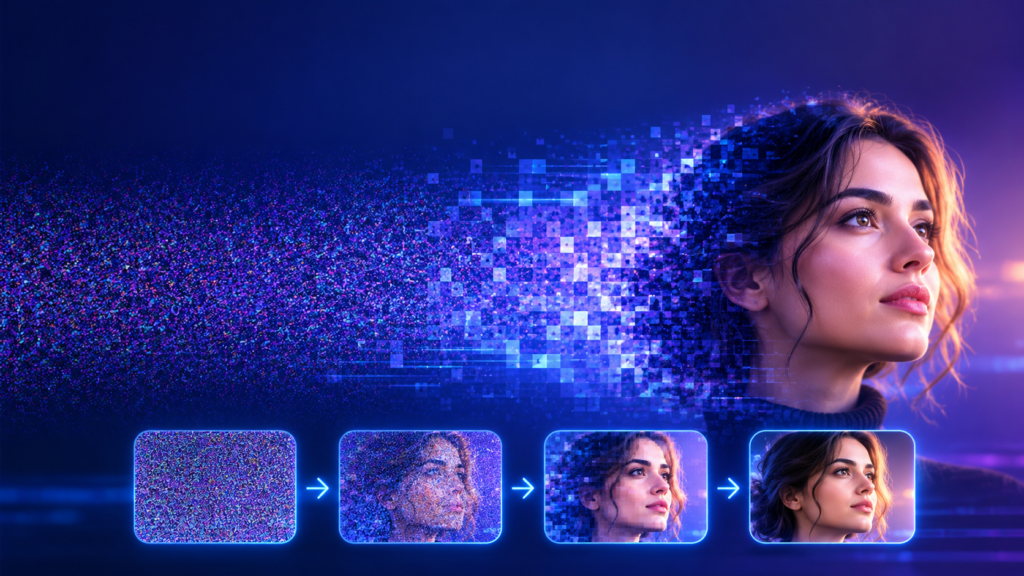
Claude is about to make AI-generated writing easier to identify—without putting a visible label on the text.
Anthropic is introducing imperceptible, machine-readable markings in text generated by supported Claude models. The watermark is designed to be invisible to users while remaining detectable by systems built to recognize Claude’s mark.
According to Anthropic’s published guidance, the marking is embedded at the model level rather than added as ordinary metadata. That means it can travel with text when users copy and paste it, and Anthropic says it may persist through some editing.
The move is part of a broader shift toward proving where AI-generated content came from.
But there’s an important distinction:
A Claude watermark does not automatically prove that Claude wrote an entire document, nor does it prove that every sentence was generated by AI.
It is better understood as a provenance signal indicating that supported Claude-generated content may have been processed by Claude.
And that difference could become very important for writers, students, developers and publishers.

What Is the Claude AI Watermark?
The Claude watermark is an invisible technical marker embedded into AI-generated text.
You won’t see a logo.
You won’t see a colored label.
There won’t necessarily be a sentence saying “Generated by Claude.”
Instead, the model modifies the statistical pattern of the generated text in a way designed to create an imperceptible signal that can later be detected.
Anthropic says the watermark does not change the meaning, quality or readability of the generated response.
For an ordinary Claude user, the output should therefore look like normal text.
The difference exists underneath the surface.
Is the Claude Watermark Visible?
No.
That’s the entire point of an invisible watermark.
A user reading a Claude response should not be able to identify the mark simply by looking at the text.
This is different from a visible AI disclosure such as:
“This content was generated by AI.”
The Claude approach is intended to provide a machine-readable signal rather than forcing a visible label into every response.
That means someone could copy a paragraph from Claude and paste it into:
- Microsoft Word
- Google Docs
- A website
- An email
- A CMS
- A social-media post
- A code editor
without seeing anything unusual in the text.
The hidden signal is intended to travel with the content.
How Does Text Watermarking Actually Work?
Anthropic has not yet published all of the technical details needed to independently reproduce or fully analyze its watermarking system.
The general concept behind AI text watermarking is different from image watermarking.
With an image, an invisible signal can be embedded directly into pixels.
Text doesn’t provide the same kind of continuous data.
Instead, text watermarking can work through the statistical choices a language model makes while generating words or tokens.
A model has many possible ways to express an idea.
For example, it might choose:
“The company announced the update yesterday.”
instead of:
“The company revealed the update yesterday.”
Both sentences mean essentially the same thing.
A watermarking system can subtly influence these choices according to a secret statistical pattern.
The resulting text still reads normally to a human.
But a detector that knows what pattern to look for can potentially identify the signal.
This general approach has been studied academically for years. Research has explored watermarking methods that alter token-selection probabilities while preserving the meaning of generated text.
Why Doesn’t Anthropic Just Add a Visible “AI-Generated” Label?
Because visible labels and invisible provenance solve different problems.
A visible label tells a reader:
“This content was generated or modified using AI.”
An invisible watermark can potentially provide a machine-readable signal that survives when the content moves between platforms.
That’s useful because ordinary metadata is often lost.
For example, if an AI-generated file is uploaded to another service, metadata associated with the original file may be stripped.
A signal embedded into the content itself can be more persistent.
Google has taken a similar approach with SynthID, which can embed invisible signals into AI-generated text and other media. Google describes SynthID as an additional provenance signal rather than a perfect AI detector.
What Happens When You Copy and Paste Claude Text?
This is one of the most important parts of Anthropic’s announcement.
Because the watermark is embedded in the text itself rather than existing only as separate metadata, Anthropic says it can travel with copied text.
So:
Claude → Copy → Google Docs
could potentially retain the mark.
Likewise:
Claude → Copy → Website
could retain it.
However, that does not mean the watermark is guaranteed to survive every possible transformation.
Anthropic specifically describes it as potentially surviving some editing, rather than claiming that it is impossible to remove or destroy.
That’s an important limitation.
Can Editing Remove a Claude Watermark?
Potentially.
Any text watermarking system has to deal with modification.
If someone heavily rewrites a paragraph, replaces many words, restructures sentences or passes the text through another generation system, the original statistical pattern could become weaker or disappear.
Academic research into text watermarking has repeatedly examined robustness against paraphrasing, synonym replacement, translation and other transformations. Results vary significantly depending on the watermarking technique and the type of editing involved.
So the correct takeaway is not:
“The Claude watermark can never be removed.”
It is:
“Anthropic is designing the mark to persist through copying and some editing, but detection is not necessarily guaranteed after extensive transformation.”
Does a Claude Watermark Prove Claude Wrote the Entire Article?
No.
This may be the biggest misunderstanding surrounding the technology.
Imagine a writer creates a 2,000-word article.
They personally write 1,500 words and ask Claude to help rewrite 500 words.
If a Claude mark is detected somewhere in the resulting content, that does not necessarily prove that Claude generated the entire 2,000-word article.
Anthropic itself describes detection of a Claude mark as indicating that the content may have been processed by Claude. It is not, by itself, a complete provenance history.
That distinction matters enormously.
AI-generated is not always the same as AI-assisted
There is a spectrum:
Human-written
↓
Human-written with AI editing
↓
Human + AI co-written
↓
Mostly AI-generated
↓
Fully AI-generated
A watermark alone doesn’t necessarily tell you exactly where a particular piece of content sits on that spectrum.
Can the Watermark Tell Which Person Used Claude?
Not based on the information Anthropic has publicly described so far.
The current concept is about identifying a Claude-generated-content signal, not publicly identifying a specific user.
That distinction is important for privacy.
A watermark saying:
“This text carries a Claude mark.”
is very different from:
“This exact text was generated by user X at 10:32 AM.”
Anthropic’s currently described system should not be interpreted as the latter.
Does Claude Watermark Code Too?
This is one area where users should avoid jumping to conclusions.
Anthropic’s announcement concerns AI-generated content, and its marking approach also covers supported generated files through provenance metadata.
But code is a special case for text watermarking.
Programming languages provide far fewer natural choices than ordinary prose.
A developer cannot randomly replace important syntax with a synonym.
That creates technical challenges for statistical watermarking.
Whether and how Claude’s marking behaves across different types of code should therefore be treated separately from ordinary prose until Anthropic publishes more technical documentation.
What About Images and Other Claude-Generated Files?
Anthropic’s approach isn’t limited to plain text.
For supported generated files, Anthropic says it will use digitally signed provenance metadata based on the C2PA standard.
C2PA is an industry standard designed to communicate information about the origin and history of digital content.
This is different from an invisible text watermark.
Think of it as two different approaches:
| Content | Marking approach |
|---|---|
| AI-generated text | Imperceptible watermark |
| Supported generated files | Signed provenance metadata |
| Human-visible label | Not the same thing |
| AI detector | Separate detection technology |
The broader goal is the same:
Make AI-generated content easier to trace.
Why Is Anthropic Doing This Now?
The timing is closely connected to new AI transparency requirements.
The EU AI Act’s Article 50 transparency provisions are taking effect around this period, including requirements related to machine-readable marking of AI-generated content.
The European Commission published a Code of Practice on marking and labelling AI-generated content in June 2026, ahead of the August 2 implementation date.
The rules distinguish between different responsibilities for AI providers and deployers.
That regulatory environment is a major reason AI companies are investing more heavily in provenance and watermarking.
Anthropic is therefore not introducing the technology in isolation.
It is part of a much larger industry shift.
Is Claude Watermarking Only for Europe?
This is where headlines can become misleading.
The regulatory motivation is strongly connected to European transparency requirements.
However, Anthropic’s current published description indicates that marking applies to supported models wherever Claude is offered, rather than being limited strictly to European users.
At the same time, the rollout language around existing versus newly launched models matters.
New Claude models launched from August 2, 2026 onward are described as supporting marking at launch.
Anthropic is also working to add marking support to models released before that date.
So users should not interpret this as:
“Every Claude model already has the watermark today.”
The transition is more complicated.
Which Claude Models Have the Watermark?
Anthropic’s public wording currently describes the rollout by model launch date, rather than giving a simple list saying every existing Claude model is already marked.
The key distinction is:
Newer models
Models launched on or after August 2, 2026 are described as supporting machine-readable marking at launch.
Older models
Anthropic says it is working to add marking support to models released before that date.
That means the exact status of an individual Claude model can depend on its rollout stage.
For publishers and businesses that need certainty, the safest approach is to check Anthropic’s current documentation for the exact model they are using.
Will Claude Watermarks Affect Writing Quality?
Anthropic says the watermark does not change the meaning, quality or readability of generated text.
Technically, however, watermarking introduces constraints into generation.
The model has to balance two objectives:
Generate good text
and
Generate text containing the watermark signal
Modern watermarking methods are designed to make that tradeoff difficult to notice.
But whether the effect is truly negligible across every language, writing style and text length is something that deserves independent testing.
This is one reason technical documentation and third-party research will be important as the system becomes widely deployed.
Will AI Detectors Automatically Detect Claude’s Watermark?
Not necessarily.
This is another common misconception.
An AI detector and a watermark detector are not the same thing.
An AI detector generally analyzes text and estimates whether it looks machine-generated.
A watermark detector looks for a specific technical signal associated with a particular watermarking system.
Think of it like this:
AI detector:
“Does this text statistically resemble AI writing?”
Claude watermark detector:
“Does this text contain the specific Claude mark I’m looking for?”
Those are fundamentally different questions.
Anthropic says it is working to enable users and third parties to detect Claude’s embedded marks, with more technical details to come.
What Happens If You Put Claude Text Through Another AI?
This is where things become complicated.
Suppose you ask Claude to write an article.
Then you paste it into another AI model and ask:
“Rewrite this completely in a different style.”
The second model may generate a substantially different sequence of words.
That can weaken or eliminate the original watermark.
The same basic challenge exists in academic research on watermark robustness.
Watermarks have to survive enough transformation to remain useful without making the text unnatural.
Some transformations preserve the signal.
Others can reduce detectability.
So Claude’s watermark should not be viewed as an unbreakable digital fingerprint.
Could People Remove Claude Watermarks?
The technical answer is that watermark robustness depends on the implementation and the type of transformation.
Anthropic has not publicly described every implementation detail needed to assess all possible removal strategies.
That is actually important from a security perspective.
Publishing the complete detection and watermark-generation mechanism could make it easier for attackers to deliberately erase the signal.
Academic research has already shown that text watermarking systems can have different levels of robustness against rewriting and adversarial transformations.
So the more useful question is not:
“Can a watermark ever be removed?”
Almost any digital marking system can face attacks.
The better question is:
“How reliably can the watermark survive ordinary real-world use?”
That will require independent testing at scale.
What Does This Mean for Students?
For students, the change could make AI-assisted writing easier to identify in some contexts.
But a watermark should not automatically be treated as proof of academic misconduct.
A student could use Claude for:
- Brainstorming
- Grammar correction
- Research organization
- Translation
- Editing
- Drafting
The educational policy determines whether those uses are permitted.
A watermark cannot determine intent.
It can potentially provide evidence that Claude was involved.
That distinction will become increasingly important as universities develop AI policies.
What Does This Mean for Writers and Bloggers?
This is probably one of the groups most interested in the announcement.
If you use Claude to generate a first draft and then heavily edit it, the final content may not necessarily retain a detectable mark.
But publishers should not build their entire editorial process around trying to remove or avoid watermarks.
The more important issue is disclosure and authorship.
If your publication says:
“This article was written entirely by our editorial team.”
but the majority of the article was generated by AI, a watermark isn’t the underlying problem.
The underlying problem is inaccurate disclosure.
Watermarking may simply make that mismatch easier to investigate.
What Does This Mean for SEO?
There is no reason to assume that a Claude watermark automatically means Google will penalize a webpage.
A watermark is a provenance mechanism.
It is not the same thing as a search-engine quality score.
Google has repeatedly emphasized the importance of useful, original content rather than simply whether AI was involved in producing it.
For publishers, the safer strategy remains:
- Research properly
- Add original information
- Verify facts
- Provide first-hand value where possible
- Avoid mass-produced low-value pages
- Edit AI output carefully
- Follow disclosure rules where applicable
Trying to “beat” a watermark should not be treated as an SEO strategy.
Could Watermarks Change How People Think About AI Writing?
Possibly.
For years, AI-generated text has often been difficult to distinguish from human writing.
AI detectors attempted to solve the problem by analyzing the output after it was created.
Watermarking approaches the problem from the opposite direction:
Mark the content when it is generated.
That could be more reliable in some situations because the model itself creates the provenance signal.
But it also introduces philosophical questions.
If a human writes 90% of a book and Claude helps rewrite 10%, what exactly should a watermark prove?
If a journalist uses Claude to translate an interview?
If a programmer uses Claude to refactor code?
If an editor asks Claude to fix grammar?
The binary distinction between:
AI
and
human
doesn’t always describe modern creative work very well.
The Biggest Limitation: A Watermark Doesn’t Prove Truth
This point is easy to miss.
A watermark can potentially tell you:
“This content came from an AI system.”
It cannot tell you:
“This content is false.”
And it cannot tell you:
“This content is true.”
AI-generated text can be accurate.
Human-written text can be false.
Watermarking establishes provenance, not truth.
A recent 2026 academic analysis makes this distinction explicitly, arguing that watermarking can identify model origin but does not itself solve the deeper problem of misinformation or establish the truthfulness of a claim.
That’s why provenance systems should complement—not replace—fact-checking.
How Claude’s Approach Compares With Google’s SynthID
Claude isn’t the first major AI system to explore text watermarking.
Google introduced SynthID for text in 2024.
Google says SynthID embeds an imperceptible watermark into generated text while maintaining quality and readability, and it can be used as a provenance signal for AI-generated content.
The two approaches share the same basic idea:
| Feature | Claude marking | Google SynthID |
|---|---|---|
| Invisible to normal readers | Yes | Yes |
| Designed for AI-generated text | Yes | Yes |
| Machine-detectable | Yes | Yes |
| Intended as provenance signal | Yes | Yes |
| Visible watermark | No | No |
| Guarantees truthfulness | No | No |
| Perfectly immune to editing | No | No |
The technology is therefore part of a wider industry movement rather than an entirely new concept.
Why This Could Become the New Standard for AI Content
AI-generated media is becoming too widespread for manual identification alone.
Images, videos, audio and text are increasingly being produced at scale.
A future internet could contain billions of pieces of synthetic content.
At that scale, provenance may become infrastructure.
Instead of asking:
“Can a human tell whether this is AI?”
platforms could ask:
“Does this content carry a trusted provenance signal?”
That’s a much more scalable approach.
It also fits into the broader ecosystem around standards such as C2PA.
What Claude Users Need to Do
For ordinary users, probably nothing.
The watermark is designed to work automatically.
You don’t need to turn it on.
You don’t need to add a special tag.
You don’t need to change your prompts.
But if you’re publishing AI-assisted work professionally, it is worth understanding what the mark means.
Most importantly:
Don’t assume a watermark equals full authorship
It can indicate Claude involvement without proving Claude generated every word.
Don’t assume editing automatically removes it
Anthropic says the mark may persist through some editing.
Don’t assume it can never disappear
Extensive rewriting or transformation may affect detectability.
Don’t confuse provenance with AI detection
They answer different questions.
Don’t confuse AI origin with factual accuracy
A watermark doesn’t tell you whether the content is true.
The Bigger Picture
Claude’s invisible watermark is part of a much larger change in how AI-generated content may work.
The first generation of generative AI focused almost entirely on creation:
Generate text.
Generate images.
Generate video.
The next phase is increasingly about provenance:
Where did this come from?
Was AI involved?
Which system generated it?
Can that claim be independently verified?
That’s why Anthropic’s announcement matters beyond Claude.
If invisible text watermarking becomes reliable enough, similar systems could eventually become normal across AI assistants.
Instead of AI-generated text being indistinguishable from ordinary text at the infrastructure level, it could carry a hidden origin signal from the moment it is created.
Final Takeaway
Anthropic is moving Claude toward a future where AI-generated text can carry an invisible machine-readable watermark.
The mark isn’t something users will see on the screen.
It is designed to be embedded into the generated text itself, allowing it to travel with copied content and potentially survive some editing.
The move is closely connected to the broader push for AI-content transparency, including the EU’s AI Act framework and its requirements around machine-readable marking of generated content.
But the most important thing to understand is what the watermark doesn’t mean.
It doesn’t prove that Claude wrote an entire article.
It doesn’t prove that a human had no role.
It doesn’t prove that the information is false.
And it doesn’t guarantee that the mark will survive every possible transformation.
Instead, it provides a potential provenance signal:
“Claude may have been involved in creating or processing this content.”
As AI-generated writing becomes harder to distinguish from human writing, that invisible signal could become an important part of the next generation of digital content verification.
The real question now is whether other AI companies—and the platforms that publish AI-generated content—will follow Anthropic’s lead.
Read More:- AI Video Generation Explained: How It Actually Works (2026) |
FAQ
Does Claude AI add invisible watermarks to text?
Anthropic is introducing imperceptible, machine-readable markings for supported Claude models. The watermark is designed to be invisible to readers and embedded at the model level.
Can people see the Claude watermark?
No. The watermark is designed to be imperceptible to normal users and should not appear as visible text, a logo or an obvious label.
Does copying Claude text preserve the watermark?
Anthropic says the watermark is part of the generated text and can travel with copied-and-pasted content. It may also persist through some editing.
Can Claude’s watermark be removed?
Heavy rewriting, paraphrasing or other transformations may affect whether a watermark remains detectable. Anthropic has not claimed that its watermark is impossible to defeat under every transformation.
Does a Claude watermark prove that Claude wrote an article?
No. Detection of a Claude mark indicates that content may have been processed by Claude. It does not by itself establish that Claude generated the entire document.
Does Claude watermark code?
The technology is primarily being discussed in the context of AI-generated content, but code presents different technical challenges from ordinary prose. Users should wait for Anthropic’s technical documentation before assuming how watermarking behaves across every coding workflow.
Is Claude watermarking only for EU users?
The regulatory motivation is strongly linked to EU AI transparency requirements, but Anthropic’s current description indicates that marking is intended for supported models wherever Claude is offered, rather than strictly limiting it to European users.
Which Claude models are currently watermarked?
Anthropic says models launched on or after August 2, 2026 support marking at launch, while the company is working to add marking support to models released before that date.
Is a Claude watermark the same as an AI detector?
No. A watermark detector looks for a specific technical signal created by the AI provider. An AI detector generally estimates whether text appears to have been generated by AI based on statistical patterns.
Does an AI watermark prove that content is false?
No. Watermarking is about provenance, not truth. A watermark can indicate AI involvement but cannot establish whether the underlying information is accurate.