Anthropic is making Claude more useful inside workplace communication with a new Slack integration that allows the AI assistant to operate more like a member of a team.
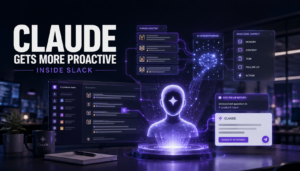
Through Claude Tag, organizations can add Claude to selected Slack channels, give it access to relevant tools and data, and allow team members to bring it into conversations using @Claude.
The bigger change is that Claude is designed to build context from the channels it can access, remember relevant information and plan tasks that need to be completed in the future.
This moves Claude beyond a simple chatbot that waits for individual prompts and toward an AI agent that can understand ongoing workplace conversations and help teams complete tasks.
Claude Can Join Slack as a Team Member
Anthropic describes Claude Tag as a new way for teams to work with Claude.
Instead of opening a separate AI chatbot every time they need help, teams can add Claude directly to Slack.
Once Claude has been granted access to selected channels, employees can tag it into conversations and delegate tasks.
This creates a much more natural workflow for organizations that already use Slack as their primary communication platform.
Claude Can Build Context From Slack Channels
One of the most important capabilities is Claude’s ability to build context from the channels it has access to.
That means Claude does not necessarily have to rely only on the single message where someone tags it.
It can use relevant information from conversations in the channels it has been granted access to.
This can make its responses more useful because workplace tasks often depend on information spread across multiple messages.
Why Conversation Context Matters
Consider a software-development team discussing a bug over several days.
One person might identify the problem.
Another employee could suggest a fix.
A third person might provide logs.
Later, someone asks Claude:
“Can you summarize what we decided and create the next steps?”
An AI with access to the relevant channel context can potentially understand the discussion rather than requiring the entire conversation to be manually pasted into a prompt.
Claude Can Remember Relevant Information
Anthropic says Claude can remember relevant information from the channels it is in.
This is an important difference from a basic chatbot interaction.
Instead of treating every request as an isolated conversation, Claude can maintain useful context from its workplace environment.
That could reduce the amount of information employees need to repeatedly explain.
Claude Can Plan Tasks for the Future
Anthropic also says Claude can plan out tasks to complete in the future.
This gives the Slack integration a more agentic character.
Rather than simply answering:
“What should I do?”
Claude can potentially help organize the work that needs to happen next.
Claude Becomes More Proactive
The broader goal is to make Claude more proactive inside workplace workflows.
Traditional chatbots generally wait for a user to provide a prompt.
Agentic systems can instead use context, tools and planned actions to help complete a larger task.
Claude Tag is an example of Anthropic moving Claude toward this model.
Employees Can Delegate Tasks Through Slack
Once Claude is available in a channel, employees can tag @Claude and delegate work.
Potential tasks could include:
- Summarizing discussions
- Researching questions
- Analyzing information
- Drafting documents
- Helping with technical work
- Organizing project information
- Planning follow-up tasks
The exact capabilities depend on the tools and data connected to Claude.
Claude Can Connect to External Tools
Anthropic says teams can connect Claude to whichever tools, data and even codebases they choose.
This is important because workplace information is rarely stored in one location.
A company’s data could exist across:
- Slack
- Git repositories
- Internal databases
- Project-management platforms
- Documentation systems
- Cloud storage
- Business applications
Connecting these sources can give Claude more context for completing tasks.
Claude and Codebases
For software teams, access to codebases could make Claude particularly useful.
A developer might discuss a bug in Slack and then ask Claude to investigate the relevant repository.
Instead of switching between multiple applications, the AI agent could potentially use connected tools to understand the problem and assist with the technical workflow.
Claude Can Work Where Teams Already Work
One of the strongest advantages of the Slack integration is convenience.
Employees do not have to leave Slack to interact with Claude.
The AI becomes part of the communication environment where teams already spend much of their working day.
From Chatbot to Coworker
The bigger strategic shift is the positioning.
Claude is increasingly being presented not simply as an AI assistant that answers questions, but as a digital coworker capable of receiving delegated tasks.
That distinction could become increasingly important as AI agents become more capable.
Slack Is a Natural Environment for AI Agents
Slack contains a huge amount of organizational context.
Teams discuss:
- Projects
- Customers
- Product decisions
- Bugs
- Marketing campaigns
- Sales opportunities
- Deadlines
- Meetings
- Internal processes
An AI agent that can safely access relevant conversations can potentially understand what a team is working on without requiring employees to manually provide all of that information.
The Context Problem in Workplace AI
One of the biggest limitations of workplace AI has traditionally been context.
Employees might ask an AI to summarize a project but forget to provide an important document or conversation.
Claude’s Slack integration attempts to reduce this problem by allowing the agent to use information from channels it has been granted access to.
Access Is Still Controlled by Organizations
This does not mean Claude automatically gets access to an entire company’s Slack workspace.
Anthropic’s description specifically refers to selected channels.
Organizations can decide where Claude is allowed to participate and what tools and data are connected.
That distinction is important for workplace privacy and security.
Permissions Matter
Giving an AI agent access to workplace conversations creates new security considerations.
Organizations need to think carefully about:
- Which channels Claude can access
- Which data sources it can use
- Which tools it can operate
- What actions it is allowed to take
- Who can delegate tasks
- How sensitive information is handled
The more capable an AI agent becomes, the more important these controls become.
AI Agents Could Reduce Repetitive Work
Many workplace tasks involve repetitive information processing.
Employees spend significant amounts of time:
- Reading messages
- Summarizing meetings
- Finding old decisions
- Searching documentation
- Creating reports
- Tracking action items
- Answering repetitive questions
An AI agent integrated into Slack could potentially automate portions of this work.
Claude Could Help With Project Management
Imagine a project channel containing weeks of conversations.
A team member could ask Claude to identify:
- What has been completed
- What remains unfinished
- Who owns each task
- What decisions were made
- Which deadlines are approaching
Instead of manually reviewing hundreds of messages, Claude could organize the information.
Claude Could Help Developers
Software-development teams may be among the biggest beneficiaries.
Claude can potentially connect Slack conversations with codebases and other developer tools.
That creates workflows such as:
Slack discussion → issue identification → codebase analysis → proposed solution
The exact actions Claude can perform depend on the tools and permissions connected to the deployment.
Claude Could Help Customer-Facing Teams
Customer-support and sales teams also generate large amounts of Slack communication.
Claude could potentially help employees find previous discussions, summarize customer issues or prepare responses based on relevant internal context.
Again, access controls are critical when customer information is involved.
Claude Could Help Marketing Teams
Marketing teams could potentially use Claude to analyze campaign discussions and organize information spread across channels.
For example, Claude could help summarize:
- Campaign decisions
- Creative feedback
- Performance discussions
- Content plans
- Upcoming deadlines
This could reduce administrative work for marketing teams.
Claude Could Help Executives
Executives often need summaries of information distributed across multiple teams.
An AI agent with appropriate permissions could potentially help surface relevant information from selected Slack channels.
This could make it easier for leaders to understand ongoing projects without reading every message.
The Rise of Persistent AI Context
Claude’s ability to remember relevant information from channels points toward a broader trend in AI.
The next generation of workplace assistants may not operate as isolated conversations.
Instead, they may maintain useful context about:
- Projects
- Teams
- Documents
- Decisions
- Tasks
- Organizational processes
That could make AI assistants much more useful over time.
AI Agents Need More Than Language Models
An AI model alone cannot perform many workplace tasks.
Agents need access to tools.
Anthropic’s Claude Tag approach reflects this by allowing teams to connect Claude to tools, data and codebases.
This turns the model into part of a larger software system.
Slack Could Become an AI Control Center
As more AI agents become integrated with workplace tools, Slack could increasingly become a control layer for business automation.
An employee could potentially communicate with several AI systems directly from Slack.
Instead of opening separate applications, users could delegate tasks through natural language.
Anthropic Is Competing in Enterprise AI
The Slack integration is also strategically important for Anthropic.
Enterprise AI is becoming one of the biggest battlegrounds in the AI industry.
Companies want AI systems that can work with their existing software rather than requiring employees to completely change their workflows.
Claude’s Enterprise Positioning
Anthropic has increasingly focused on professional and enterprise applications for Claude.
Coding, research, analysis and business workflows are important parts of that strategy.
Integrating Claude into Slack strengthens the company’s position in workplace AI.
OpenAI and Microsoft Are Also Building AI Coworkers
Anthropic is not alone.
OpenAI, Microsoft, Google and other AI companies are all developing increasingly agentic workplace products.
The competition is shifting from:
Who has the smartest chatbot?
to:
Who can build the most useful AI worker?
The Importance of Proactive AI
Proactive AI could eventually become a major differentiator.
Instead of waiting for users to ask every question, AI agents could identify unfinished work, remember previous decisions and prepare useful outputs.
However, proactivity must be balanced with user control.
Too Much Proactivity Could Become a Problem
An AI that can read workplace conversations and take actions could create problems if it misunderstands context.
For example, a casual comment in Slack should not necessarily be interpreted as an official instruction.
This makes authorization and confirmation mechanisms extremely important.
Human Oversight Still Matters
For high-impact actions, companies may want humans to approve actions before an AI agent executes them.
This could be particularly important for:
- Financial decisions
- Customer communications
- Code deployment
- Security changes
- HR decisions
- Legal documents
The more authority an agent receives, the greater the potential consequences of mistakes.
Privacy Will Be a Major Concern
Slack conversations can contain sensitive business information.
Employees may discuss:
- Customer data
- Financial information
- Product roadmaps
- Internal strategy
- Security issues
- Employee matters
Organizations therefore need clear policies around AI access.
Security Becomes More Important as Agents Gain Tools
Anthropic’s own AI-safety research has highlighted the importance of evaluating agentic systems as they receive more autonomy and tool access.
The company has studied scenarios involving autonomous agents taking actions in simulated environments, including situations involving Slack and other workplace tools.
That research illustrates why increased capability must be accompanied by strong safeguards.
Claude’s Slack Integration Is a Step Toward AI Organizations
Anthropic is also researching systems where multiple AI agents collaborate as an “AI organization.”
Its research suggests that groups of AI agents can accomplish more complex tasks but can also introduce additional alignment risks.
Claude’s integration with workplace communication tools is part of the broader movement toward agents operating in real organizational environments.
The Future Could Be More Autonomous
Today’s Claude integration still involves humans delegating tasks.
The longer-term direction could involve AI systems that independently monitor projects, identify problems and suggest or prepare actions.
That could significantly change how businesses operate.
AI Could Become Part of Every Team
Instead of having one general-purpose chatbot, companies could eventually have AI agents assigned to different functions:
- Engineering agent
- Marketing agent
- Sales agent
- Finance agent
- Research agent
- Customer-support agent
Slack could provide a common communication layer between humans and these AI systems.
What Makes Claude Tag Different?
The key difference is context.
Claude is designed to operate inside selected Slack channels, use relevant information from those conversations and work with connected tools and data.
That is more integrated than simply copying a Slack message into a separate chatbot.
Anthropic Is Moving Toward Context-Aware AI
The development reflects a broader shift in AI design.
Early chatbots focused primarily on generating answers.
Modern AI agents increasingly need to understand:
Context → Intent → Tools → Actions → Follow-up
Claude Tag brings several of these components into a workplace communication environment.
The Biggest Opportunity
The biggest opportunity is reducing the amount of manual coordination required from employees.
Instead of spending hours searching through conversations and documents, workers could delegate information-heavy tasks to Claude.
The Biggest Risk
The biggest risk is giving AI systems too much access or authority without sufficient controls.
An AI that misunderstands a conversation can potentially make a much bigger mistake when it has access to tools and organizational data.
What Businesses Should Consider
Organizations considering Claude inside Slack should establish clear policies covering:
- Data access
- Channel permissions
- Tool permissions
- Human approvals
- Sensitive information
- Audit logs
- AI-generated actions
- Employee training
Final Verdict
Anthropic’s Claude Tag is an important step toward making AI agents part of everyday workplace communication.
By allowing Claude to join selected Slack channels, remember relevant information, use connected tools and plan future tasks, Anthropic is moving Claude beyond the traditional chatbot model.
The biggest change is not simply that Claude can answer questions inside Slack.
It is that Claude can potentially understand ongoing team context and work from that context.
For businesses, that could mean less time spent searching through conversations, summarizing discussions and coordinating repetitive work.
But greater AI autonomy also creates greater responsibility.
As AI agents receive access to workplace conversations, databases and codebases, companies will need strong permission systems, security controls and human oversight.
The broader trend is clear:
AI assistants are moving from tools employees talk to into digital coworkers that can participate in the work itself.
Read More:- Prompt Engineering for Writers: Complete 2026 Guide
FAQ
What is Anthropic’s latest Claude Slack update?
Anthropic has updated Claude Tag so it can use context from across a Slack channel, along with its memory and standing instructions, to better decide when it should proactively participate in conversations.
What is Claude Tag?
Claude Tag is Anthropic’s AI agent for Slack. Teams can add Claude to selected channels and tag @Claude to delegate tasks, while Claude can also perform certain work proactively.
Can Claude now read entire Slack conversations?
Claude Tag can now use context from across the channel instead of relying only on the single message in front of it. Anthropic describes the update as Claude “reading more of the room.”
What changed compared with the previous version?
Previously, Claude’s proactive decisions were based primarily on the message or immediate context it could see. The updated system considers wider channel context, memory and standing instructions when deciding whether to respond.
How much better is Claude at deciding when to respond?
Anthropic says Claude is roughly 30% better at determining when it should and should not proactively respond after the update.
Can Claude respond without being tagged?
Yes. When proactive or “ambient” behavior is enabled, Claude can monitor the channels it has access to and step in when it believes it can help.
Can Claude follow up on unfinished tasks?
Yes. Claude Tag can follow up on threads or tasks that have gone quiet or remain unresolved.
Can Claude remember previous Slack conversations?
Yes. Claude Tag maintains relevant memory and context across conversations and days, within the channels and workspace permissions configured by the organization.
Can Claude learn from other Slack channels?
It can use information from other channels when it has been explicitly granted permission to access them. Anthropic says Claude does not report from private channels it has not been granted access to.
Can Claude access private Slack channels?
Only when the organization gives Claude access to those channels. Access is controlled through the organization’s permissions and channel configuration.
Can Claude access company tools and data?
Yes. Organizations can connect Claude to tools, data sources and codebases that administrators choose to make available.
Can Claude work with GitHub?
Yes. Claude Tag can be connected to repositories and developer tools, allowing it to assist with coding workflows and actions such as creating draft pull requests when appropriately configured.
Can Claude create code from a Slack conversation?
Yes. Anthropic demonstrates workflows where a bug discussed in a Slack thread can be investigated and turned into a draft pull request using connected tools.
Can Claude analyze company data?
Yes. Anthropic has described using Claude Tag internally for data analytics, including KPI monitoring, pipeline investigations and answering data questions in Slack.
Can Claude monitor KPIs?
Yes. Anthropic says its internal Claude Tag workflows can monitor pipelines and dashboards and provide explanations when important metrics move unexpectedly.
Can Claude create scheduled tasks?
Yes. Claude Tag can be given standing instructions and can perform recurring tasks such as weekly readouts, monitoring and other scheduled workflows.
Can Claude work on tasks for several days?
Yes. Anthropic describes Claude Tag as being able to run long-running tasks asynchronously and follow up when work is complete or when additional input is needed.
Can Claude send updates by itself?
Yes. Claude can proactively post updates when configured to do so, including notifying a team when a job finishes or when a thread needs attention.
Can everyone in a Slack channel see Claude’s work?
Yes. Claude Tag operates as a shared resource in the channel, so team members can see its work and continue the conversation.
Does every person get a separate Claude in Slack?
No. In a channel, the team works with a shared Claude identity rather than each person having a completely separate Claude instance.
Can different channels have different Claude permissions?
Yes. Administrators can configure access at organization, workspace and private-channel levels, allowing different tools and repositories to be available in different contexts.
Can Claude accidentally share information between teams?
Anthropic’s permission model is designed to keep memory and access scoped by channel and workspace. Administrators can configure separate access for sensitive channels.
Who controls Claude Tag’s permissions?
The organization’s Primary Owner or Owner is responsible for setting up Claude Tag’s identity, tools, repositories and channel access.
Can administrators see what Claude has done?
Yes. Claude Tag includes an Audit view where administrators can review scheduled and one-time tasks and network calls made through its agent identity.
Can administrators delete Claude’s memory?
Yes. Admins can review, edit and delete Claude Tag’s stored memory according to the organization’s controls.
Is Claude Tag available to everyone?
Claude Tag is currently available in beta for Claude Team and Enterprise customers in Slack.
When did Claude Tag replace the old Claude Slack experience?
Claude Tag switched over as the Slack experience on August 3, 2026.
Does Claude Tag cost extra?
Anthropic says the August 13 context update was available at no additional cost at the time of the announcement. Organization-level usage can still be subject to configured token and spending limits.
Can companies set spending limits?
Yes. Administrators can set token-spend limits for the organization and individual channels.
What model does Claude Tag use?
Anthropic’s Claude Tag announcement states that Claude Tag works with Opus 4.8.
Can Claude work without leaving Slack?
Yes. Claude Tag is designed to operate directly within Slack channels, threads and the Slack AI assistant panel.
Can users message Claude privately?
Yes. Claude Tag supports direct messages with Claude in Slack as well as channel tagging.
Can Claude monitor a channel continuously?
With appropriate standing instructions and permissions, Claude can monitor a channel and proactively surface relevant information or tasks.
Can Claude create weekly reports?
Yes. Anthropic specifically describes recurring workflows such as weekly data readouts and other scheduled summaries.
Can Claude investigate bugs automatically?
Yes. Anthropic says its internal teams use Claude Tag to investigate bugs, analyze connected data and draft fixes.
Can Claude notify a human when it needs approval?
Yes. Claude can surface issues and tag the relevant person when a human decision or input is needed.
Can Claude work with CRM information?
Anthropic demonstrates workflows where Claude can pull together CRM notes, recent Slack conversations and call history to prepare meeting briefings when those tools are connected.
Could Claude become a digital coworker?
That is essentially the direction Anthropic is pursuing. Claude Tag is designed to behave more like a shared team member that can remember context, perform work and proactively follow up.
How is this different from a normal chatbot?
A traditional chatbot generally waits for a prompt and answers it. Claude Tag can use ongoing channel context, memory, tools and standing instructions to perform longer-running and proactive work.
What is the biggest advantage of Claude Tag?
The biggest advantage is context. Teams do not have to repeatedly explain the background of a project because Claude can use relevant information from the channels and tools it has permission to access.
What is the biggest risk?
The biggest risk is giving an AI agent access to too much sensitive information or too many tools without appropriate permissions, oversight and audit controls.
What does this update mean for the future of AI agents?
It shows a shift from AI assistants that simply answer questions toward AI agents that can continuously understand workplace context, monitor tasks and take action.
What is the biggest takeaway?
Claude is becoming significantly more proactive inside Slack. The latest update allows it to consider wider channel context, memory and standing instructions when deciding whether to participate, making it more capable of acting like a persistent AI teammate rather than a simple chatbot.