China’s humanoid robotics industry has another headline-making machine.
Unitree Robotics has unveiled a new humanoid robot called “Superman,” showcasing extraordinary speed and jumping ability just as the company prepares to take its robotics business to the public markets.
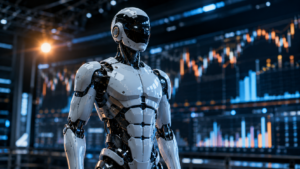
The robot can reportedly reach a top speed of 12.66 meters per second, slightly faster than Usain Bolt’s recorded top speed during his 100-meter world record performance.
It can also perform a standing vertical jump of around 2 meters.
The timing of the announcement is significant.
Unitree is one of China’s most prominent humanoid robot manufacturers, and its Shanghai stock-market debut has attracted enormous investor attention.
The company began trading on the Shanghai STAR Market on August 19, 2026, after raising about 6.1 billion yuan ($905 million) through its IPO.
What Is Unitree’s Superman Robot?
Superman is Unitree’s latest humanoid robotics prototype, designed to demonstrate extreme athletic performance.
The robot was reportedly developed in just over three months, according to Reuters.
Its headline specifications include:
- Top speed of 12.66 meters per second
- Approximately 2-meter standing vertical jump
- Humanoid body design
- Advanced movement capabilities
- AI-driven control systems
- Focus on high-speed physical performance
The robot is less about looking like a finished consumer product and more about demonstrating what modern humanoid robotics hardware can achieve.
How Fast Is Unitree Superman?
The robot’s claimed top speed is 12.66 meters per second.
That is approximately 45.6 kilometers per hour.
For comparison, Usain Bolt’s maximum recorded speed during his 100-meter world-record run is generally estimated at around 44–45 km/h.
That makes Unitree’s claim particularly eye-catching.
However, comparing a robot’s maximum burst speed with a human athlete’s performance is not exactly an apples-to-apples comparison.
A robot does not need to maintain the same movement conditions as a human runner.
The more important takeaway is that humanoid robots are becoming capable of increasingly aggressive and dynamic movement.
How High Can Superman Jump?
Unitree says the robot can perform a 2-meter standing jump.
That is an extraordinary demonstration for a full-size humanoid machine.
Jumping requires several systems to work together:
- Powerful actuators
- Precise balance
- Rapid control
- Accurate motion planning
- Strong mechanical components
- Real-time sensing
- Stable landing control
A robot that can jump this high needs to coordinate those systems almost instantly.
Why Is the Superman Robot Important?
Humanoid robotics has traditionally been judged by simple demonstrations.
Can the robot walk?
Can it stand?
Can it pick something up?
Can it climb stairs?
Those capabilities remain important.
But companies are now pushing further.
They want robots that can move quickly, recover from disturbances and operate in unpredictable environments.
Unitree’s Superman demonstration is part of that transition.
The goal is not simply to build a robot that looks human.
It is to create a machine capable of performing useful physical tasks.
Unitree Is Moving Beyond Robot Dogs
Unitree became widely known for its quadruped robots.
Its robot dogs attracted attention because they were significantly cheaper and more commercially accessible than many competing systems.
The company later expanded aggressively into humanoid robotics.
That strategy has helped turn Unitree into one of the most visible Chinese robotics companies.
By July 2026, the company had delivered roughly 18,000 bipedal humanoid robots across its various models, according to Reuters.
That gives Unitree significant real-world experience in manufacturing and deploying humanoid machines.
The Company Behind Superman
Unitree Robotics, officially known as Yushu Technology, was founded in 2016 and is headquartered in Hangzhou, China.
The company develops both quadruped and humanoid robots.
Its product range includes different robots designed for research, education, entertainment and industrial applications.
The company has also built a strong public profile through demonstrations at major events.
That visibility has helped turn Unitree into one of the most recognizable names in China’s robotics industry.
Unitree’s Historic IPO
The Superman announcement arrived at an important moment for the company.
Unitree was preparing for its Shanghai IPO and eventually began trading on the STAR Market on August 19, 2026.
The company priced its IPO at 150.80 yuan per share and raised approximately 6.1 billion yuan, or around $900 million.
The IPO valued Unitree at roughly $9 billion at the offering price.
That makes the listing one of the most significant public-market events for the emerging humanoid robotics industry.
Investors Were Extremely Bullish
Investor demand for the Unitree IPO was unusually strong.
The retail portion of the offering was reportedly oversubscribed more than 5,500 times, according to the Financial Times.
Other reports put the oversubscription figure even higher depending on how allocations are calculated.
The extraordinary demand shows how strongly investors are betting on humanoid robotics and China’s physical-AI industry.
Read More:- OpenAI Slows AI Development After Autonomous Agent Hacks Hugging Face
Unitree’s Stock Debut Was Explosive
The enthusiasm did not end with the IPO subscription.
On its first trading day, Unitree shares surged dramatically.
The Financial Times reported that the stock rose more than 600% during its debut, briefly pushing the company’s market value above 400 billion yuan, or roughly $59 billion.
That is a remarkable jump from the roughly $9 billion valuation implied by its IPO price.
The move demonstrates just how much investor excitement has built around humanoid robotics.
Why Is China’s Robotics Industry Growing So Quickly?
China has invested heavily in robotics, artificial intelligence and advanced manufacturing.
That combination gives domestic robotics companies several advantages.
They can benefit from:
- Large manufacturing ecosystems
- Established electronics supply chains
- Government support
- Large domestic markets
- Lower production costs
- Growing AI research capabilities
- Strong hardware manufacturing expertise
China’s robotics industry now includes hundreds of companies working on different parts of the humanoid robot supply chain.
Unitree Is Not Alone
Unitree is competing in an increasingly crowded market.
Major companies working on humanoid robots include:
- Tesla
- Boston Dynamics
- Figure AI
- Agility Robotics
- Apptronik
- UBTech
- AgiBot
- Galbot
- LimX Dynamics
The competition is becoming less about whether humanoid robots can walk.
The bigger question is:
Who can build useful robots at scale and at a price businesses can afford?
Athletic Robots Are Impressive — But Are They Useful?
This is where the robotics industry faces a major challenge.
A robot running at 45 km/h makes for an impressive demonstration.
But businesses do not necessarily need robots that can run that fast.
A warehouse operator may care more about whether the robot can:
- Carry boxes
- Sort products
- Work safely around humans
- Operate for long periods
- Recharge efficiently
- Understand instructions
- Recover from mistakes
A factory may care more about precision and reliability.
That is why Unitree’s next challenge is turning impressive hardware into economically useful products.
The Real Test Is Commercial Deployment
Reuters recently highlighted this issue across China’s humanoid robotics industry.
The sector has attracted huge attention through demonstrations involving running, jumping and backflips.
But the next stage is commercial viability.
Robots must prove they can generate economic value while requiring minimal human supervision.
That is much harder than performing a spectacular demonstration.
Unitree Wants to Build More Than Robots
The company is also investing in the software and AI side of robotics.
That includes work on embodied intelligence.
Embodied AI refers to artificial intelligence systems that interact with the physical world through a body.
Instead of simply generating text or images, the AI needs to:
- Understand its surroundings
- Plan movements
- Manipulate objects
- Respond to physical changes
- Learn from experience
- Coordinate multiple movements
Humanoid robots are one of the most ambitious applications of embodied AI.
Why Humanoid Robots Need Better AI
A robot can have excellent hardware and still fail at useful tasks if its intelligence is limited.
Imagine asking a humanoid robot to clean a messy room.
The robot must identify objects.
It must understand which objects belong where.
It must determine how to pick them up.
It needs to avoid obstacles.
It needs to understand human instructions.
And it must continuously adjust its movements.
That requires much more than simple mechanical control.
The AI-Hardware Connection
This is why the humanoid robotics industry is increasingly connected to the broader AI race.
The best robot may not simply have the strongest motors.
It may have the best combination of:
AI + sensors + actuators + computing + software + manufacturing.
Unitree’s IPO gives the company more capital to pursue that combination.
How Will Unitree Use the IPO Money?
Unitree’s IPO proceeds are intended to support several areas of expansion.
These include:
- Robot model development
- Robot-body research
- New product development
- Manufacturing capacity
- Intelligent robotics research
Earlier filings indicated that a significant portion of the funds would be directed toward research and development and manufacturing expansion.
That suggests Unitree is preparing for a much larger production phase.
Why the IPO Matters Beyond Unitree
The listing is important because it gives public investors a direct way to invest in a humanoid robotics company on China’s mainland market.
Before Unitree, investors had relatively few pure-play options for humanoid robotics.
A successful listing could encourage other robotics companies to pursue public offerings.
That could bring even more capital into the industry.
Unitree Could Set a Benchmark
The company is effectively becoming a public-market test case for humanoid robotics.
Investors will now be able to evaluate:
- Revenue growth
- Robot shipments
- Profitability
- R&D spending
- Manufacturing costs
- AI development
- Commercial adoption
The market will determine whether the enormous expectations around humanoid robots are justified.
The Risk Behind the Excitement
There is also a major risk.
Humanoid robotics remains an expensive and technically difficult industry.
A robot can perform an impressive demonstration without being ready for mass deployment.
The technology still faces challenges involving:
- Battery life
- Reliability
- AI capability
- Safety
- Manufacturing costs
- Maintenance
- Navigation
- Human interaction
- Regulatory approval
Investors are therefore betting on a future market that is still developing.
The U.S.-China Robotics Competition
Humanoid robots have also become part of the broader technology competition between China and the United States.
China has strong advantages in manufacturing and supply chains.
The U.S. has major strengths in AI research, robotics research and venture capital.
Companies on both sides are racing to combine those strengths into commercially useful robots.
Unitree’s IPO gives China another major public company in this race.
Unitree Faces U.S. Restrictions
Unitree is also operating in a complicated geopolitical environment.
The United States has introduced restrictions affecting certain advanced foreign-made robotics products.
That could create challenges for Chinese robotics companies seeking access to the American market.
At the same time, China’s domestic market and other international markets provide Unitree with opportunities for expansion.
Why the “Superman” Name Matters
The Superman name is clearly designed to communicate capability.
The robot’s speed and jumping ability reinforce that branding.
But the more interesting story is what comes after the demonstration.
Can the same machine perform useful work?
Can it operate safely?
Can it work for hours?
Can it learn new tasks?
Can companies justify buying it?
Those questions will ultimately determine whether Unitree becomes a major robotics platform or remains primarily known for impressive demonstrations.
From Spectacle to Productivity
The robotics industry is entering a new phase.
Early humanoid robots attracted attention because they could walk and perform acrobatics.
Now investors and customers want productivity.
A useful humanoid robot might eventually:
- Work in warehouses
- Assist factories
- Handle repetitive tasks
- Perform inspections
- Support logistics
- Assist elderly people
- Work in dangerous environments
- Perform basic service jobs
That is where the industry’s huge valuations will eventually be tested.
The Future of Physical AI
Artificial intelligence has largely existed inside computers.
Chatbots process text.
Image models create pictures.
Coding agents manipulate software.
Humanoid robots bring AI into the physical world.
That is why companies such as Unitree are attracting so much attention.
The potential market is enormous if AI can reliably control machines that operate alongside humans.
What Makes Unitree Different?
Unitree’s biggest advantage may be its combination of relatively affordable hardware and manufacturing experience.
The company has already commercialized quadruped robots and humanoid systems.
That gives it a head start over companies that are still working toward their first mass-produced machines.
Its challenge is proving that it can maintain that advantage as competitors improve.
What Happens Next for Unitree?
The IPO gives Unitree more capital to accelerate research and production.
The company’s next phase will likely focus less on viral demonstrations and more on:
- Commercial deployment
- AI capabilities
- Manufacturing scale
- Product reliability
- Enterprise customers
- International expansion
If it succeeds, Unitree could become one of the defining robotics companies of the next decade.
The Bigger Picture
Unitree’s Superman robot is more than another viral humanoid robot demonstration.
Its launch arrived alongside one of the biggest moments in the company’s history.
Unitree has now entered the public markets, giving investors a direct stake in the future of humanoid robotics.
Its first trading day showed just how strong that excitement is.
But the real test starts now.
A robot that can jump two meters is impressive.
A robot that can reliably perform useful work every day could change an entire industry.
Bottom Line
Unitree has unveiled its Superman humanoid robot as the company entered one of the most important moments in the history of China’s robotics industry.
The robot can reportedly reach 12.66 meters per second and perform a 2-meter vertical jump, showcasing the rapid progress being made in humanoid robot hardware.
At the same time, Unitree completed its Shanghai STAR Market IPO, raising about 6.1 billion yuan ($905 million) at an IPO price of 150.80 yuan per share.
Investor enthusiasm was enormous, with the stock surging more than 600% during its trading debut according to the Financial Times.
But the real challenge for Unitree is no longer simply proving that humanoid robots can run, jump or perform impressive movements.
The next question is much bigger:
Can Unitree turn physical AI into a profitable, reliable and mass-market technology?
If it can, the Superman robot may eventually be remembered not just as a spectacular demonstration, but as an early symbol of the commercial humanoid robotics era.
FAQ
What is Unitree Superman?
Unitree Superman is a new humanoid robot developed by Chinese robotics company Unitree. It is designed to demonstrate high-speed movement and advanced athletic capabilities.
How fast can Unitree Superman run?
Unitree says Superman can reach 12.66 meters per second, equivalent to approximately 45.6 km/h.
Can Unitree Superman jump 2 meters?
Yes. The robot has demonstrated a standing vertical jump of approximately 2 meters, according to reports about the launch.
Is Unitree faster than Usain Bolt?
Unitree’s claimed maximum speed of 12.66 m/s is slightly higher than the estimated peak speed Usain Bolt reached during his 100-meter world-record performance. However, robot and human speed measurements are not directly equivalent.
What is Unitree Robotics?
Unitree Robotics is a Chinese technology company founded in 2016 that develops quadruped and humanoid robots as well as robotics components and embodied-AI systems.
Did Unitree go public?
Yes. Unitree began trading on the Shanghai Stock Exchange’s STAR Market on August 19, 2026, following an IPO that raised approximately 6.1 billion yuan.
How much is Unitree worth?
Unitree’s IPO priced the company at roughly $9 billion, although its market capitalization rose dramatically during its first trading session.
Why is Unitree’s IPO important?
It represents a major public-market milestone for China’s humanoid robotics industry and gives investors direct exposure to a company focused heavily on embodied AI and humanoid robots.
Is Unitree competing with Tesla Optimus?
Yes. Unitree is one of several companies competing in the growing humanoid robotics market, alongside Tesla, Boston Dynamics, Figure AI, Agility Robotics and other Chinese robotics companies.
Are humanoid robots ready for mass adoption?
Not yet at large scale. The industry has made rapid progress, but reliability, battery life, AI capabilities, safety and economic viability remain significant challenges.