How to Sell AI Prompts and Digital Products Online in 2026
Selling digital products remains one of the most accessible online businesses in 2026 — no inventory, no shipping, no physical overhead. Among the most popular categories are AI prompt packs, curated collections of tested prompts that help buyers get better results from tools like ChatGPT, Midjourney, or AI video generators. The AI prompt marketplace alone is projected to reach $2.51 billion in 2026. Here’s how to actually build one that sells.
Step 1: Pick a Specific Niche, Not a Broad One
The sellers making real income in 2026 aren’t the ones listing generic, one-line prompts for a few dollars. They’re packaging niche-specific systems — a complete workflow of prompts built around a single use case, like AI video generation, real estate marketing, or e-commerce product descriptions — and pricing them accordingly. A focused, well-tested prompt pack for a specific audience consistently outperforms a broad, generic collection.
Step 2: Build and Test Your Prompts
Before packaging anything, actually use your own prompts to produce real results. Buyers can tell the difference between prompts that were genuinely tested against a specific tool and prompts that were quickly generated without verification. Document what works, refine based on actual output, and organize prompts by use case rather than just dumping them into one long list.
Step 3: Package It Properly
A prompt pack isn’t just a text file — the products that sell well include context around each prompt: what it does, an example output, and guidance on how to customize it. Formats like a structured PDF, Notion page, or Google Doc all work, but presentation matters. A well-designed, organized product signals quality before a buyer even tries it.
Step 4: Choose Where to Sell
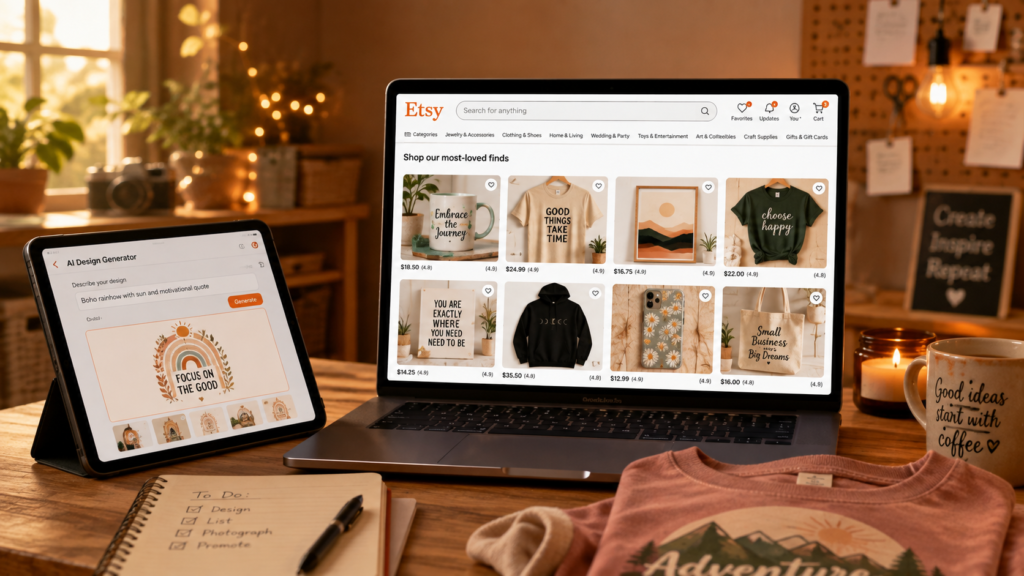
You generally have three options: a dedicated prompt marketplace (which brings built-in discovery but takes a commission), a general digital-goods platform like Gumroad or Etsy, or your own website with direct checkout. The most common approach is to start on a marketplace to validate real demand, then build your own direct sales channel once you know the product converts — since owning the customer relationship long-term is far more valuable than depending entirely on marketplace traffic.
Step 5: Consider Pricing Beyond One-Time Sales
While one-time purchases are the easiest starting point, subscription-based prompt access is increasingly common for buyers who want ongoing updates as AI models change. Subscription pricing for prompt libraries commonly runs $10-$30 a month, and the economics improve significantly once you have a base of repeat subscribers, since it becomes a recurring revenue stream instead of a series of one-off sales.
A Real Example: AI Video Prompts
One high-demand category right now is prompt packs built specifically for AI video generation tools, since getting consistent, high-quality results from these tools often depends heavily on prompt structure. If you’re exploring this category yourself, our own AI Video Prompt Generator eBook — 1,000+ tested prompts across multiple styles — is a practical example of how a focused prompt pack can be structured and delivered.
Frequently Asked Questions
Do I need technical skills to sell AI prompts?
No — most sellers use simple documents (PDF, Notion, Google Docs) rather than any coding or technical platform.
How much can you realistically earn selling AI prompts?
Earnings vary widely, but sellers focusing on niche, well-tested prompt packs priced at $29-$69 tend to outperform those selling cheap, generic prompts.
Is it legal to sell AI-generated digital products?
Generally yes, though it’s worth disclosing AI involvement where relevant and checking the specific terms of the AI tools and platforms you use.