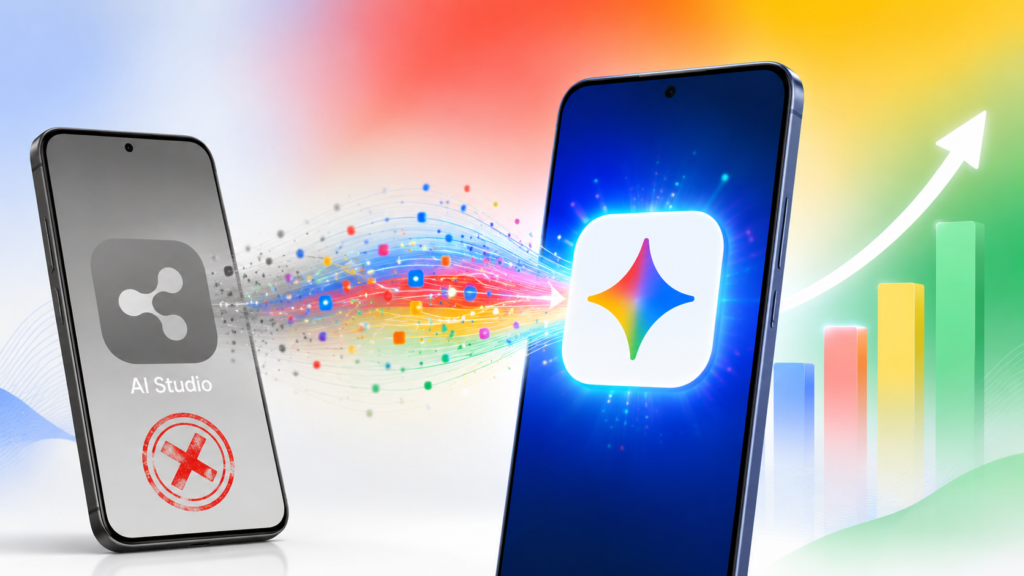
Microsoft is adding hidden AI-provenance signals to images created or modified with supported AI features, including C2PA Content Credentials and, in some Microsoft systems, invisible watermarking. These signals can identify information such as the application or AI model involved, even when no visible “AI-generated” label appears on the image.

Quick Summary
- Microsoft Paint’s Image Creator adds a C2PA manifest to AI-generated images.
- C2PA Content Credentials are cryptographically signed provenance information attached to a file.
- Microsoft says AI-generated or AI-altered images in Microsoft 365 can contain metadata identifying the AI model, application and creation time.
- A hidden provenance signal is different from a visible watermark.
- Microsoft also uses invisible watermarking in supported AI systems.
- The goal is primarily AI transparency and content provenance, not visibly branding every AI image.
- Not every image opened in Paint or Photos automatically receives an AI watermark; the provenance applies to supported AI generation or editing features.
Microsoft Is Putting More Than Pixels Into AI Images
An AI-generated image can contain information about how it was created even when the image itself looks completely normal.
This is becoming increasingly important as AI-generated images become difficult to distinguish from photographs and traditionally created artwork.
Microsoft’s current approach combines several forms of provenance technology.
The most important are:
- C2PA Content Credentials
- Metadata
- Invisible watermarking in supported systems
- Visible watermarks where users or organizations enable them
Microsoft says these technologies help provide information about the origin and history of digital content.
Paint’s AI Image Creator Adds C2PA Credentials
Microsoft officially confirms that images generated with Image Creator or other AI features in Paint contain a C2PA manifest.
Microsoft’s Paint documentation specifically states that Content Credentials based on the C2PA standard are implemented to help users identify AI-generated images.
C2PA stands for the Coalition for Content Provenance and Authenticity.
Instead of changing how an image looks, C2PA attaches provenance information to the digital file.
That information can help compatible systems determine:
- Where the content came from
- Which application generated it
- Which AI technology was involved
- When it was created
- Whether it has subsequently been modified
What Is a C2PA Content Credential?
A C2PA Content Credential is essentially a tamper-evident provenance record attached to digital content.
Think of it as a digital history attached to an image.
The image may look exactly like a normal JPEG or PNG.
But compatible software can inspect its provenance information and potentially discover that the file was generated using an AI tool.
Microsoft describes C2PA manifests as cryptographically signed metadata containing information such as the creator, generation tools and creation timestamps.
That makes C2PA fundamentally different from putting a large logo on an image.
This Is Not the Same as a Visible Watermark
The term “watermark” can be misleading because Microsoft uses both visible and invisible provenance mechanisms.
A visible watermark might appear as:
AI-Generated
or a Copilot-style symbol in a corner of an image.
An invisible watermark does not change what the viewer sees.
Instead, it embeds a machine-readable signal into the image itself.
Microsoft’s documentation says supported systems can use invisible watermarking alongside C2PA Content Credentials.
That means an image can look completely clean while still carrying information that a provenance-detection system can identify.
Microsoft Photos Is Part of the Bigger AI-Provenance Push
The broader Microsoft ecosystem is increasingly designed to preserve provenance when AI is used to create or modify content.
Microsoft’s documentation for AI-generated and AI-altered content covers image workflows across Microsoft products and services.
The company says additional information can be added to image metadata even when a visible watermark is not enabled.
That information can include:
- AI model
- Application used
- Creation time
- Other provenance details
So the more accurate way to describe the development is not that Photos secretly stamps every image.
It is that Microsoft’s supported AI workflows can leave machine-readable provenance signals in generated or AI-edited media.
Why Is Microsoft Doing This?
The main reason is transparency.
Generative AI makes it increasingly difficult to determine whether a picture represents a real photograph, human artwork or synthetic content.
That creates problems for:
- Journalism
- Social media
- Advertising
- Political communication
- E-commerce
- Copyright
- Misinformation
- Digital forensics
Provenance systems give platforms another signal they can use when evaluating where content came from.
Microsoft explicitly describes its provenance technology as a way to support transparency around AI-generated content.
Why Hidden AI Markers Matter
Invisible provenance becomes especially useful when visible labels are removed or never displayed.
Imagine an AI-generated image being downloaded and shared on social media.
A viewer might not see any indication that AI was involved.
If the file still contains compatible provenance information, a supporting system may be able to inspect it.
That creates a second layer of transparency:
Visible disclosure for humans + machine-readable provenance for software.
The two approaches can work together.
Can You See the AI Watermark?
Usually, no.
A C2PA credential is not designed to appear as visible text over the image.
Similarly, Microsoft’s invisible watermarking is designed to be imperceptible to normal viewing.
Microsoft provides provenance-detection capabilities that can analyze supported images, audio and video for C2PA credentials and Microsoft watermarking signals.
So a user can look at an image and see nothing unusual while a provenance system identifies its AI origin.
How Microsoft Distinguishes Provenance From Trust
A provenance signal does not prove that an image is true.
This distinction is extremely important.
C2PA can help answer:
“Where did this file come from?”
It cannot automatically answer:
“Is the scene depicted in this image real?”
Microsoft explicitly notes that provenance information does not determine whether content is true, accurate, harmful or trustworthy.
For example, an AI-generated image could have perfectly valid provenance credentials while depicting a completely fictional event.
The credential verifies origin information—not reality.
What Information Can Be Stored?
AI provenance metadata can contain more information than simply saying “AI-generated.”
Depending on the supported system, the information can include:
| Information | Possible Purpose |
|---|---|
| AI model | Identifies the generation technology |
| Application | Shows which software created or modified content |
| Timestamp | Indicates when content was generated |
| Creator information | Can identify the content creator in supported systems |
| Modification history | Shows changes to the asset |
| C2PA signature | Helps verify provenance integrity |
Microsoft says its C2PA manifests can contain the creator, generation tools and creation timestamps.
Does Editing the Image Remove the AI Information?
Not necessarily, but provenance can change as content moves through different applications.
C2PA is designed to support a chain of provenance.
For example:
AI generation → editing → export → publication
A compatible application can add another signed action to the content’s history.
However, not every application preserves provenance metadata.
If an image is processed by software that strips metadata, some provenance information can disappear.
That is one reason provenance systems are not perfect solutions to AI-content identification.
Microsoft Is Also Using Invisible Watermarks
Microsoft’s current provenance strategy goes beyond metadata by using invisible watermarking in supported AI systems.
According to Microsoft, invisible watermarking embeds a machine-readable signal directly into generated content, such as the pixels of an image or waveform of audio.
This is different from metadata because metadata exists as information associated with the file.
An invisible watermark is embedded into the content itself.
That gives Microsoft two complementary approaches:
C2PA → cryptographically signed provenance
Invisible watermark → embedded machine-readable signal
Why Use Both?
Using both methods creates a more resilient provenance system.
Metadata can be stripped.
Invisible signals can potentially survive some transformations.
C2PA provides structured, cryptographically signed information.
Invisible watermarking provides another detection mechanism.
Microsoft describes these as complementary signals rather than interchangeable technologies.
Is Microsoft Secretly Tracking Every Image?
The available documentation does not support the claim that Microsoft is secretly tracking every image a user opens or edits in Paint or Photos.
The provenance mechanisms discussed here apply to supported AI-generated or AI-altered content.
That is very different from saying:
“Every image you open in Paint gets secretly tracked.”
Microsoft’s Paint documentation says its AI Image Creator outputs contain C2PA manifests, while Microsoft’s Microsoft 365 documentation discusses provenance information added to images generated or altered using AI.
This distinction should be preserved when reporting the story.
What About Privacy?
AI provenance can raise legitimate privacy questions because metadata may contain information about how content was created.
For example, metadata can reveal:
- Which application was used
- Which AI model was used
- When the content was created
- Potential creator information in supported implementations
Microsoft says AI-related metadata can be added to generated or altered content.
That makes it important for users and businesses to understand what information travels with their media files.
Why This Matters for Creators
Creators using AI tools need to understand that an image can carry provenance information even when it looks completely original.
This matters for:
- Freelancers
- Graphic designers
- Content creators
- AI artists
- Marketing agencies
- Ecommerce sellers
- Publishers
- Social media managers
If an image was generated using Microsoft’s AI features, a platform or client may be able to determine that through supported provenance tools.
That is not necessarily a bad thing.
For professional creators, provenance can actually provide evidence about the creation process.
AI Disclosure Could Become Standard
Microsoft’s approach is part of a much broader movement toward machine-readable AI disclosure.
As generative AI becomes normal in advertising, journalism, social media and commerce, platforms need ways to determine how digital content was produced.
A simple visible label can help people.
Machine-readable provenance can help software.
Together, they could become a standard part of digital media.
What This Means for AI Images in 2026
AI-generated images are increasingly becoming identifiable through their creation history rather than their appearance alone.
That is a major change.
For years, AI detection focused on analyzing pixels and trying to determine whether an image “looked AI-generated.”
Provenance takes a different approach.
Instead of asking:
“Does this image look like AI?”
the system can ask:
“Does this image carry verifiable evidence about how it was created?”
That is potentially a much stronger approach when provenance survives the content’s journey across platforms.
Should You Be Worried?
For most users, the existence of AI provenance is more about transparency than surveillance.
If you use Microsoft’s AI image-generation tools, the resulting image may carry information indicating its AI origin.
That can be useful when:
- Publishing responsibly
- Disclosing AI use
- Protecting creative provenance
- Establishing an asset’s origin
- Verifying digital media
The bigger issue is understanding what information is attached to the content and whether other software preserves or removes it.
Read More:- 7 AI Tools for a One-Person Business in 2026
Final Takeaway
Microsoft really is embedding AI-provenance information into supported AI-generated images, but the viral claim that Paint and Photos are “secretly watermarking every image” is too broad. Microsoft’s official documentation confirms that Paint’s Image Creator outputs contain C2PA Content Credentials, while Microsoft also uses metadata and invisible watermarking across supported AI systems.
The technology is designed primarily for content provenance and AI transparency.
An image can therefore look completely normal while still containing machine-readable information about its AI origin.
The most important distinction is between:
Visible watermark → something humans can see
Metadata/C2PA → information attached to the file
Invisible watermark → machine-readable signal embedded into the content
As AI-generated media becomes harder to distinguish from real photography, systems like these could become increasingly important.
For creators, marketers and publishers, the message is simple:
In 2026, an AI image’s creation history may be just as important as the pixels you see.
Update note: Microsoft’s provenance features are evolving quickly. Product-specific behavior can differ between Paint, Photos, Microsoft 365, Microsoft Designer and Microsoft Foundry, so future updates should verify the exact app and AI feature involved.
Does Microsoft Paint secretly watermark AI images?
Microsoft Paint’s AI Image Creator adds C2PA Content Credentials to AI-generated images. These are machine-readable provenance records and are different from a visible watermark.
Can you see the watermark on a Microsoft AI image?
Not necessarily. C2PA metadata and invisible watermarking are designed to provide machine-readable provenance without necessarily changing the visible appearance of the image.
What is a C2PA Content Credential?
C2PA Content Credentials are cryptographically signed provenance information attached to digital content. They can record details such as the application or AI technology used to create or modify the content.
Does Microsoft watermark every image opened in Paint?
No. The available Microsoft documentation does not support that claim. The provenance features discussed here apply to supported AI-generated or AI-altered content, not every ordinary image opened in Paint.
Can Microsoft AI watermarks be detected?
Microsoft provides provenance-detection capabilities that can check supported media for C2PA Content Credentials and Microsoft invisible watermarking signals.
Does an AI watermark prove that an image is fake?
No. Provenance information can indicate how content was created or modified, but it does not determine whether the content is truthful, accurate or trustworthy.