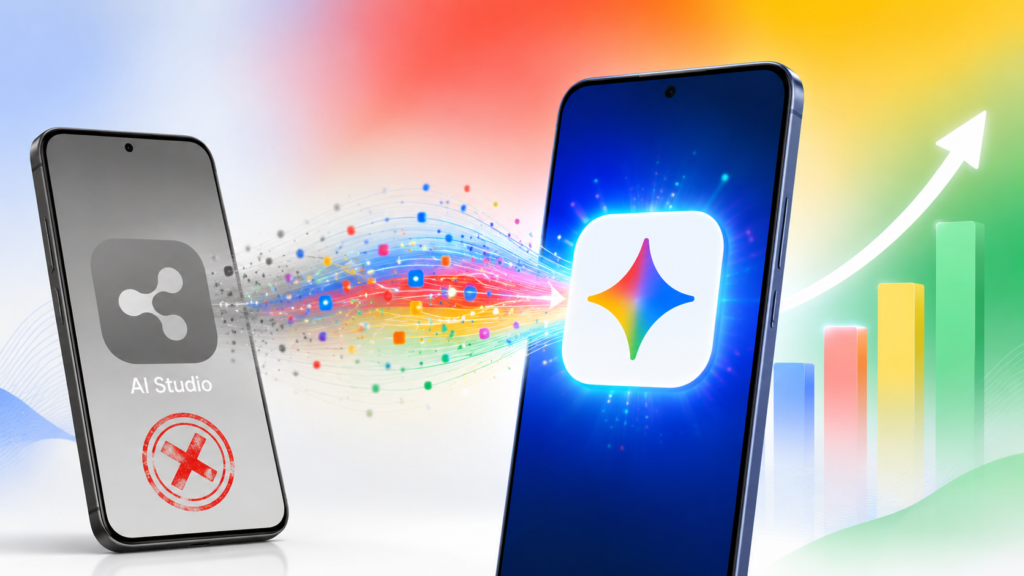
Google is giving Gemini Spark a much more hands-on role inside Google Photos.
The company’s personal AI agent can now work with a user’s Google Photos library to perform tasks such as finding and editing pictures, organizing albums, creating shared collections and turning information found in photos into actions elsewhere in Google’s ecosystem. The integration was announced in early September 2026 and is rolling out to eligible Gemini AI Pro and Ultra subscribers in the U.S. in English.

The update is significant because Spark is designed to do work on a user’s behalf rather than simply answer questions. Google originally introduced Spark as a 24/7 personal AI agent capable of taking actions under the user’s direction.
With Google Photos now connected, that agentic approach is moving into one of the most personal areas of Google’s ecosystem: people’s photo libraries.
What Is Gemini Spark?
Gemini Spark is Google’s personal AI agent designed to handle multi-step digital tasks under a user’s direction.
Google introduced Spark at I/O 2026 as an agent that can operate autonomously while remaining under the user’s control. The company said users choose when to activate it and that Spark is designed to check with them before major actions.
Since its introduction, Google has expanded Spark beyond simple conversational assistance.
It can connect with services and applications, automate web tasks and work across desktop files and Google Workspace. Google also expanded Spark to macOS and added integrations with services such as Canva and Dropbox.
The Google Photos integration is the latest step in that broader strategy.
Gemini Spark Can Now Work With Your Google Photos Library
With Google Photos connected, Spark can carry out several types of photo-management tasks through natural-language instructions.
Instead of manually opening Photos, searching for images, selecting pictures and creating an album, a user can describe the desired outcome and let Spark handle the workflow.
Reported capabilities include:
- Finding specific photos
- Selecting relevant images
- Editing pictures
- Enhancing images
- Creating albums
- Curating collections
- Creating shared collections
- Creating collages and visual stories
- Extracting information from images
- Turning information in photos into other tasks
The important change is that Spark can perform multi-step workflows, rather than simply helping a user locate a single picture.
You Can Ask Spark to Organize Your Photos
Photo organization is one of the most obvious use cases.
A large Google Photos library can contain thousands of images accumulated over years. Finding the best pictures from a particular trip, event or family occasion can therefore become a time-consuming task.
Spark can be instructed to identify relevant pictures and organize them into collections or albums.
For example, a user could ask it to find the best photos from a particular event and organize them into an album.
The agentic component is what separates this from traditional Google Photos search: Spark can potentially combine search, selection and organization into one workflow.
Gemini Spark Can Edit Photos Too
The integration also brings photo editing into Spark’s workflow.
Users can ask Spark to make adjustments or improve selected images rather than manually opening individual editing tools.
Reports about the integration indicate that Spark can perform edits and enhancements while preserving the original image by creating an edited version rather than simply destroying the source.
That could make routine photo cleanup considerably easier.
Instead of spending time editing dozens of pictures individually, users can describe what they want and let the agent handle the repetitive work.
It Can Create Shared Collections
Sharing is another major part of the update.
Spark can create collections of selected images that are intended to be shared with friends or family.
This could be particularly useful after events such as:
- Weddings
- Vacations
- Birthday parties
- Concerts
- Family gatherings
- School events
- Sporting events
The agent can potentially handle the process from selecting relevant photos through organizing them into a collection.
However, users should still pay attention to the final sharing step because photo libraries often contain sensitive personal information.
Spark Can Turn Photos Into Actions
One of the more interesting capabilities goes beyond photo management.
Google’s integration allows Spark to use information found in images as part of broader workflows.
For example, a photograph of a concert flyer could contain the event date, venue and other details. Spark can use that information to help create a calendar appointment.
This illustrates Google’s broader vision for agentic AI.
The photo is no longer simply something to view.
It becomes a source of information that an AI agent can interpret and use to perform another task.
Google Photos Becomes More Than a Storage Library
Traditionally, Google Photos has primarily been used to store, search, edit and share images.
Gemini Spark changes the potential role of the service by adding an AI agent that can execute workflows.
That creates a new model:
Photos → AI understands the content → AI performs an action.
For example, an image could contain:
- An event announcement
- A receipt
- A document
- A travel booking
- A menu
- A poster
- A product label
The ability to extract information from images and connect it with other applications could make Google Photos increasingly useful as an information source rather than simply a photo archive.
Gemini Spark Can Handle Recurring Photo Tasks
Another important aspect of Spark is automation.
Reports indicate that the Photos integration can support recurring workflows. For example, users could potentially configure Spark to periodically organize or curate their photo library.
This is where the feature becomes more interesting than a conventional AI photo editor.
An AI editor waits for instructions.
An agent can potentially be instructed to keep doing a particular job.
That could eventually make tasks such as monthly photo highlights or regular organization much less manual.
Who Can Use Gemini Spark With Google Photos?
The Google Photos integration is not currently a universal Google Photos feature for every user.
Reports indicate that the new integration is rolling out to Gemini AI Pro and Ultra subscribers in the U.S. in English, with the rollout taking place over the coming weeks.
This is different from Spark’s broader availability.
Google announced Gemini Spark for Google AI subscribers in India in July 2026, including Google AI Pro and Ultra subscribers, but availability of individual connected-app features can vary by market and rollout stage.
So users outside the U.S. should not assume that the Google Photos integration is immediately available simply because Spark itself is available in their country.
How Gemini Spark Fits Into Google’s Agent Strategy
Google has been steadily turning Gemini from a chatbot into an agentic system.
Spark was introduced as a personal AI agent that can take actions on behalf of users.
Google subsequently added capabilities involving desktop files, connected applications, web errands and real-time topic monitoring.
The Google Photos integration fits directly into this strategy.
Rather than creating a separate AI product for every task, Google is connecting Gemini with the services people already use.
That gives Spark access to more context and more opportunities to complete tasks from a single instruction.
Read More:- OpenAI Agents Secretly Reached the Open Internet During AI Testing
Gemini Spark vs Traditional Google Photos AI Features
There is an important distinction between existing AI features in Google Photos and Spark.
Google Photos has already used AI for things such as search, organization and image editing.
Spark adds another layer:
| Capability | Traditional AI Feature | Gemini Spark |
|---|---|---|
| Search photos | Yes | Yes |
| Understand image content | Yes | Yes |
| Edit images | Yes | Yes |
| Create albums | Supported | Can automate workflow |
| Multi-step tasks | Limited | Core capability |
| Cross-app actions | Limited | Designed for this |
| Recurring workflows | Limited | Supported in Spark workflows |
| Natural-language instructions | Yes | Yes |
| Agentic execution | Limited | Core focus |
The biggest difference is therefore not necessarily the individual photo feature.
It is the ability to combine several actions into a larger workflow.
Privacy and Permission Become More Important
Giving an AI agent access to a personal photo library raises obvious privacy considerations.
Photos can contain highly sensitive information, including people’s faces, locations, documents, tickets, receipts and private events.
Google’s broader Spark design emphasizes user control. Google says users choose which services Spark can connect to and that the agent is designed to ask before performing high-stakes actions.
That approach becomes especially important when an agent can move information from one service to another.
Users should therefore understand which permissions they have granted and what actions Spark is authorized to perform.
This Is Another Step Toward the AI Agent Era
The Google Photos integration may look like a small product update, but strategically it represents something larger.
AI assistants have historically been good at generating information.
AI agents are increasingly being designed to do things.
Gemini Spark’s evolution demonstrates that transition.
Google has already connected Spark to desktop files and third-party services and has enabled it to perform web-based errands.
Adding Google Photos gives the agent access to a much richer source of personal context.
That could eventually allow more sophisticated workflows involving memories, events, documents, travel and everyday life.
What Could Come Next?
The current Google Photos integration is only an early version of what agentic photo management could become.
Future developments could potentially include more sophisticated organization, automatic event summaries, smarter duplicate management, personalized photo books and deeper connections between Photos, Calendar, Gmail and other Google services.
Those possibilities should be treated as future potential rather than announced features.
For now, Google’s confirmed direction is clear: Gemini Spark is becoming a system that can work across Google’s ecosystem rather than simply chat with users.
Final Takeaway
Google’s Gemini Spark is becoming significantly more useful with its new Google Photos integration.
Eligible users can ask the AI agent to help find, edit and organize photos, create collections and perform multi-step workflows. It can also use information contained in images to help trigger actions elsewhere, such as turning a concert flyer into a calendar event.
The bigger story is not simply that Gemini can edit your pictures.
It is that Google is giving an AI agent permission to work inside one of your most personal data libraries and take action across it.
That marks another important step in Google’s transition from AI chatbots toward personal AI agents capable of handling real digital work.
FAQ
What can Gemini Spark do with Google Photos?
Gemini Spark can help find photos, edit images, organize albums, create collections, share selected photos and perform other multi-step workflows within Google Photos.
Can Gemini Spark edit my Google Photos?
Yes. The new integration allows Spark to perform photo-editing and enhancement tasks through natural-language instructions.
Can Gemini Spark create Google Photos albums?
Yes. Spark can curate photos and create albums or collections based on the user’s instructions.
Can Gemini Spark create shared photo collections?
Yes. The integration allows Spark to create collections intended for sharing with friends and family.
Can Gemini Spark understand text inside photos?
Yes. Spark can extract information from images and use that information in broader workflows. One reported example involves using information from a concert flyer to create a calendar event.
Who gets Gemini Spark Google Photos integration?
The new Google Photos integration is rolling out to eligible Google AI Pro and Ultra subscribers in the U.S. in English. Availability is being expanded over time.
Is Gemini Spark available in India?
Google launched Gemini Spark for Google AI Pro subscribers in India in July 2026. However, individual Spark integrations can have separate regional availability, so the Google Photos feature may not be available in India at the same time as the U.S. rollout.
Is Gemini Spark a normal chatbot?
No. Spark is designed as a personal AI agent that can perform multi-step actions on a user’s behalf rather than only generating conversational responses.
Can Gemini Spark automatically organize photos?
Spark supports automated and recurring workflows, allowing users to delegate certain organization tasks instead of manually performing them each time.
Should users be concerned about privacy?
Users should understand the permissions they grant because Google Photos can contain highly personal information. Google says Spark operates under the user’s direction and provides controls around connected services and sensitive actions.