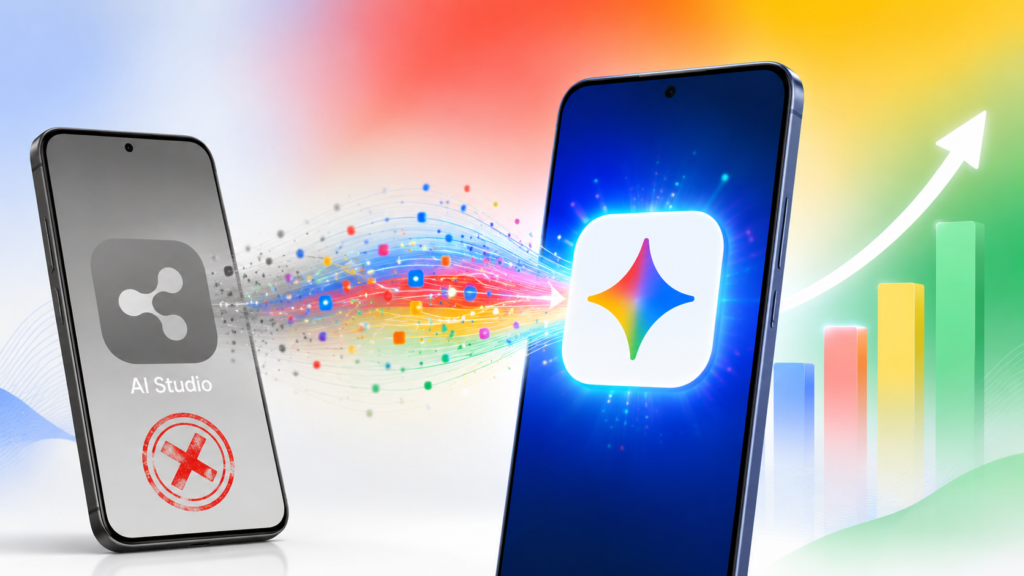
Google is moving closer to the end of its long-running Google Assistant era on mobile, while simultaneously pushing Gemini much deeper into the Android ecosystem.
The company has confirmed that Google Assistant will begin disappearing from eligible Android devices starting September 4, 2026, with the transition rolling out over several weeks. Gemini will become the primary assistant experience on supported Android phones and tablets.
But the timing is significant for another reason. Google is not simply replacing one voice assistant with another. Throughout 2026, the company has been turning Gemini into a broader intelligence layer for Android, adding proactive assistance, agentic capabilities, connected apps, contextual features and new ways to interact with the phone.
Google Assistant’s Mobile Era Is Coming to an End
Google originally announced its plan to move mobile users from Google Assistant to Gemini in March 2025.
The company said it was upgrading the Assistant experience because generative AI had changed expectations for what a digital assistant should be capable of doing. Rather than relying primarily on predefined commands, Google wants Gemini to understand context and handle more complicated requests.
That transition is now reaching its final stage.
Google has begun notifying users that it will start removing Google Assistant from Android phones on September 4. The change will roll out gradually, meaning users may not lose access on exactly the same day. Once Gemini takes over on an affected device, users will not be able to switch back to the traditional Google Assistant.
The transition also extends beyond phones and tablets to connected experiences such as Wear OS devices, headphones, earbuds and phone-projected Android Auto.
Gemini Is Becoming More Than a Voice Assistant
Google’s strategy for Gemini is much bigger than simply replacing the Assistant name.
At Google I/O 2026, Google described a broader shift toward making Android an “intelligence system.” The company introduced Gemini Intelligence, which is designed to help Android devices perform more complex tasks and automate actions rather than simply respond to individual questions.
This includes capabilities such as simplifying form filling, summarizing information and assisting with tasks across the device.
Google has also been developing Android experiences around AI agents. Its Android Halo concept, for example, is designed to show users what an AI agent is doing while it works on a task in the background.
That represents a significant change in Google’s vision for a smartphone assistant.
Instead of:
User → Voice command → Assistant response
Google increasingly wants:
User → Gemini understands the goal → Gemini interacts with apps and services → Task gets completed
Gemini Is Getting Deeper Into Android Apps
Google has been expanding Gemini beyond its standalone app.
In May, Google announced Gemini-powered experiences for Chrome on Android, including features designed to summarize articles, manage tasks and automate certain activities. Its auto-browse functionality is intended to let Gemini carry out multi-step actions while requiring confirmation for sensitive operations.
Google has also been adding more connected services to Gemini.
In August, the company announced integrations involving productivity, creativity, entertainment, local services, music and lifestyle apps. Depending on availability, Gemini can connect users with services for activities such as booking experiences, finding events, managing music and handling other tasks.
This makes the transition away from Assistant more understandable.
Google is effectively replacing a command-based assistant with a system that can act as an interface between the user and a growing collection of apps.
The September Android Update Shows Google’s Direction
Google’s September Android feature drop provides another example of how deeply Gemini is being integrated into Android.
One new capability allows users to use Gemini to remember where they placed important items. Users can provide information about an item’s location, potentially including a photo, and later retrieve that information through Gemini or the relevant Android experience.
Google is also adding Guided Vision to Gemini Live, allowing the assistant to use the phone’s camera and provide spoken assistance for understanding objects and surroundings.
These features illustrate the difference between traditional Assistant and Google’s newer AI strategy.
Google Assistant was primarily designed to respond to commands.
Gemini is increasingly being positioned as an assistant that can understand what the user is seeing, remember useful context and help complete more complicated tasks.
What Happens to Google Assistant After September 4?
The September 4 date does not mean every Google Assistant-powered product will immediately disappear.
Google’s original transition announcement said that the classic Assistant would eventually no longer be accessible on most mobile devices, while the company would also bring Gemini-powered experiences to other device categories.
Current reporting around the September transition indicates that Google Home and some other Google Assistant products are on a different timetable.
That distinction matters because “Google Assistant shutdown” can sound like the entire Assistant ecosystem is being switched off simultaneously.
The more accurate description is that Google is retiring the classic Assistant experience from mobile and replacing it with Gemini, while the broader transition across Google’s hardware ecosystem continues.
What Android Users Should Expect
For users with a compatible Android phone, the change should feel less like installing a completely separate assistant and more like Google changing the underlying assistant experience.
Gemini is designed to handle many familiar assistant tasks while adding capabilities that were difficult for the traditional Assistant to provide.
Users can expect the transition to focus increasingly on:
- Natural-language conversations
- More contextual answers
- Integration with Google apps
- Connected third-party services
- Multimodal interactions
- AI-powered task assistance
- Agentic workflows
- Camera-based assistance
- Personalized and proactive features
However, the experience will depend on the device, Android version, region, account type and availability of individual Gemini features.
Why Google Is Making the Change
The bigger reason is strategic consolidation.
Google has spent years developing separate products and services around search, voice assistants, generative AI and machine learning. Gemini gives the company an opportunity to connect those capabilities around a common AI platform.
The company’s own announcements increasingly describe Gemini as an agent that can take action rather than merely answer questions. In May 2026, Google said more than 900 million people were using Gemini each month across more than 230 countries and over 70 languages.
Google is therefore betting that the future of mobile assistance will not be based primarily on short voice commands.
Instead, it sees an AI assistant capable of understanding context, accessing multiple services and completing multi-step tasks.
The Biggest Challenge for Gemini
The transition also creates a major expectation problem for Google.
Google Assistant became popular partly because it was simple. Users could say a command to set a timer, make a call, send a message or get directions without having to explain much.
Gemini is considerably more capable, but greater capability does not automatically mean a better everyday assistant.
For Google’s strategy to work, Gemini needs to remain fast, reliable and predictable for basic tasks while also handling much more complicated requests.
That is particularly important because users will have less choice once Google Assistant is removed from supported mobile devices.
The question will no longer be whether users prefer Gemini to Assistant.
For many Android users, Gemini will simply become the assistant they have.
Affitronix Analysis: Google Is Turning Android Into an AI Platform
The Google Assistant transition is best understood as part of a much larger Android strategy.
Google is not just replacing an old assistant with a new chatbot. It is gradually moving AI deeper into the operating system.
Gemini is appearing in Android’s assistant experience, Chrome, connected apps, camera-based experiences and emerging agentic features.
That could eventually make the smartphone less dependent on traditional app-by-app interaction.
Instead of opening an app, finding a feature and completing several steps manually, users could increasingly describe what they want and let an AI system coordinate the process.
That is a much more ambitious goal than the original Google Assistant.
It also explains why Google is willing to retire a product that has been part of Android for nearly a decade.
What Happens Next?
The first major milestone is September 4, 2026, when Google begins removing Assistant from affected mobile devices.
The rollout will continue over the following weeks.
At the same time, Google is expected to continue expanding Gemini across Android, connected applications and other Google products.
The long-term outcome will depend on whether Gemini can deliver something Google Assistant could not: an AI assistant that is both simple enough for everyday commands and capable enough to complete complex tasks on the user’s behalf.
For Android users, the change marks the end of one era and the beginning of Google’s much larger Gemini experiment.
The Assistant era is fading. Google’s AI-first Android era is taking its place.
Read More:- Anthropic Launches Claude Fable 5.1 and Mythos 5.1 With Major AI Coding Upgrade
Frequently Asked Questions
When will Google Assistant shut down on Android?
Google will begin removing Google Assistant from affected Android mobile devices on September 4, 2026. The transition is expected to roll out gradually over several weeks.
Will Gemini replace Google Assistant?
Yes. Google is transitioning eligible Android phones and tablets from the traditional Google Assistant to Gemini as the primary AI assistant experience.
Can I switch back to Google Assistant after Gemini replaces it?
According to reports about Google’s transition notice, once the change reaches an affected device, users will no longer be able to switch back to the traditional Google Assistant.
Why is Google replacing Assistant with Gemini?
Google wants its assistant experience to handle more complex, contextual and AI-powered tasks. Gemini is designed to interact with apps and services and support more advanced agentic workflows than the traditional Assistant.
Will Gemini work with Android apps?
Yes. Google is expanding Gemini’s connections with Google services and third-party apps. The company has announced integrations covering productivity, entertainment, local services, music and other categories.
Is Google Assistant disappearing from every Google device?
No. The mobile transition is happening on a different timetable from Google’s broader Assistant-to-Gemini transition across products. Google has indicated that Gemini-powered experiences will also come to other device categories over time.
What new Gemini features are coming to Android?
Google is expanding Gemini with features involving proactive assistance, connected apps, camera-based help, task automation and agentic capabilities. The September Android update also adds features such as Guided Vision and Gemini-powered item-location reminders.