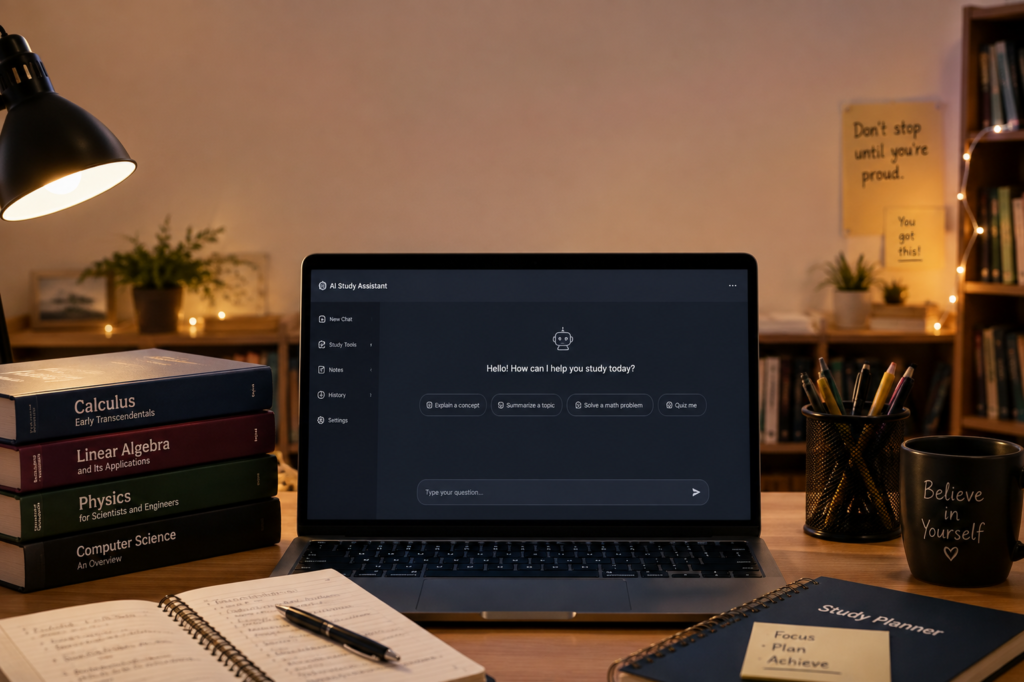
ChatGPT has evolved far beyond the chatbot that became popular for answering questions and generating text. In 2026, it can help with writing, research, coding, file analysis, data analysis, image generation, web search and increasingly complex multi-step work.

The latest GPT-5.6 generation is also pushing ChatGPT further toward an AI work assistant. OpenAI describes GPT-5.6 Sol as a model designed for complex coding, knowledge work, research, cybersecurity, science, computer use and design.
But does that make ChatGPT the best AI tool in 2026?
Not automatically.
ChatGPT has become more capable, but it also has usage limits, plan differences and the same fundamental problem faced by other generative AI systems: it can still produce incorrect information.
This ChatGPT review examines what the platform offers in 2026, what has changed, where it performs well, its limitations, pricing structure and who should consider using it.
What Is ChatGPT?
ChatGPT is OpenAI’s general-purpose AI assistant.
It can answer questions, explain concepts, write and rewrite content, help with coding, analyze files and images, perform data analysis, generate images and search the web depending on the user’s plan and available features.
The important change in 2026 is the breadth of the platform.
ChatGPT is no longer best understood simply as a conversational chatbot. It is increasingly becoming a workspace where users can move between different types of digital tasks without switching between multiple AI products.
What’s New in ChatGPT in 2026?
The biggest developments are centered around newer models, research capabilities, file handling and longer-running AI work.
GPT-5.6
GPT-5.6 is the major model generation currently rolling out across ChatGPT.
OpenAI says GPT-5.6 Sol is designed for demanding work across coding, knowledge work, research, cybersecurity, science, computer use and design. GPT-5.6 Sol Pro is positioned as the highest-capability option for difficult tasks and longer-running workflows.
The model family is divided into capability tiers:
- GPT-5.6 Sol
- GPT-5.6 Terra
- GPT-5.6 Luna
For ChatGPT specifically, Free and Go users receive GPT-5.6 Luna as their default model, while eligible Plus, Pro, Business and Enterprise users can access GPT-5.6 Sol with different reasoning settings. Pro and Enterprise users can also access GPT-5.6 Sol Pro.
This tiered approach gives OpenAI a way to offer different levels of speed, capability and usage depending on the plan.
ChatGPT Work
One of the more significant changes in 2026 is ChatGPT Work.
OpenAI describes Work as an agent for longer and more involved tasks. It can research and analyze information, work across connected apps and files, and produce finished documents, spreadsheets, presentations, reports and Sites. It can also run scheduled tasks and monitor for changes.
That represents an important change in the way ChatGPT works.
The traditional chatbot workflow is:
Ask → Receive answer
The newer agentic workflow is closer to:
Give a goal → AI performs multiple steps → Review the result
Work is rolling out to eligible paid plans, with Free and Go excluded from the current Work rollout.
Better Deep Research
ChatGPT’s deep research capabilities have also continued to develop.
OpenAI’s 2026 updates added more control over research sources, including the ability to focus research on specific websites and connected apps. Users can also create and edit a research plan before research begins and track or adjust the process while it runs.
This makes ChatGPT more useful for research-heavy work than a basic conversational chatbot.
ChatGPT Features
Writing and Editing
ChatGPT can help create, rewrite, summarize and edit content.
Common uses include:
- Blog posts
- Emails
- Reports
- Product descriptions
- Scripts
- Social media content
- Outlines
- Brainstorming
- Editing
- Translation
The biggest advantage is flexibility. Users can provide detailed instructions about audience, tone, structure and purpose.
Web Search
ChatGPT can search the web for current information.
This is particularly useful for topics where static model knowledge would not be sufficient, such as recent news, product developments and current events.
However, web search does not eliminate the need for verification. Important information should still be checked against the original source.
Deep Research
Deep research is designed for multi-step research rather than a quick answer.
It can gather information from multiple sources and produce structured, cited research outputs.
For users doing market research, competitive research or detailed topic analysis, this can be significantly more useful than ordinary chat.
File Uploads and Analysis
ChatGPT can work with supported files such as PDFs, spreadsheets, presentations and images.
OpenAI says users can use uploaded files for tasks including summarization, extraction, comparison, data analysis and transformation.
This makes ChatGPT useful for tasks such as:
- Summarizing a report
- Comparing documents
- Analyzing spreadsheet data
- Extracting information from PDFs
- Reviewing presentations
- Turning documents into structured information
Data Analysis
ChatGPT can analyze structured data and create visualizations using its data-analysis capabilities.
This is particularly useful for users who do not want to manually write code for every basic data-analysis task.
Image Generation
ChatGPT also supports image creation and image editing through natural-language instructions.
This makes it possible to move between text and visual content within the same platform.
Voice
ChatGPT supports voice conversations on supported platforms, allowing users to interact with the assistant without typing every request.
For users who prefer conversational interaction, this can make ChatGPT feel more like an always-available assistant.
ChatGPT Plans in 2026
ChatGPT is available across several consumer and organizational plans.
| Plan | Best suited for |
|---|---|
| Free | Casual users |
| Go | Users who want more access at a lower price |
| Plus | Regular individual users |
| Pro | Heavy and advanced individual users |
| Business | Teams and organizations |
| Enterprise | Larger organizations |
The exact models, limits and features available to each plan can change as OpenAI updates ChatGPT. The current GPT-5.6 documentation shows meaningful differences between Free/Go and paid plans.
Is ChatGPT Free?
Yes.
OpenAI’s current Free tier includes access to GPT-5.6 Luna along with features such as web search, data analysis, file and image uploads, image creation and GPTs, subject to usage limits.
For casual users, the Free plan can therefore be enough.
ChatGPT Pricing in 2026
OpenAI’s consumer pricing varies by plan and market.
The company introduced ChatGPT Go at $8 per month in the U.S., while Plus has historically been positioned at $20 per month and Pro at $200 per month. Go pricing can be localized in some markets.
Because OpenAI can change pricing, limits and regional availability, users should check the current official pricing information before subscribing.
The more important question is not simply how much ChatGPT costs.
It is whether the additional access saves enough time to justify the subscription.
ChatGPT Free vs Paid
For occasional users, Free is often enough.
A free user can use ChatGPT for:
- Everyday questions
- Basic writing
- Brainstorming
- Learning
- Web searches
- Some file and image tasks
- Image creation
Paid plans become more useful for people who use AI frequently and need higher limits or access to more advanced models and capabilities.
For someone using ChatGPT several times every day for professional work, the productivity benefits may make a paid plan easier to justify.
What Is ChatGPT Best For?
ChatGPT’s biggest strength is versatility.
Content Creation
Writers, bloggers and marketers can use it for ideation, outlining, drafting, editing and content transformation.
Research
Web search and deep research make it useful for finding and organizing information from multiple sources.
Coding
Developers can use ChatGPT for coding assistance, debugging, explanations and technical problem-solving.
Learning
Students and professionals can ask follow-up questions and request explanations at different levels of complexity.
Productivity
ChatGPT can help organize information, summarize documents, create plans and transform large amounts of material into more useful formats.
Data Work
Users can upload spreadsheets and other supported files for analysis and visualization.
ChatGPT Pros
Broad Range of Capabilities
ChatGPT can cover many different tasks from one platform.
Strong General-Purpose Assistant
It is useful even when the user does not have a highly specialized workflow.
Research Features
Web search and deep research make it much more useful for current and research-heavy tasks.
File and Data Support
Working with documents, spreadsheets and other files expands its usefulness beyond normal chat.
Agentic Direction
ChatGPT Work shows OpenAI’s move toward AI systems that can complete multi-step tasks rather than simply answer individual questions.
ChatGPT Cons
It Can Still Be Wrong
A confident-sounding AI response is not automatically accurate.
Important claims should be checked against reliable sources.
Usage Limits
The amount of access users receive varies by plan and model. OpenAI can also change limits over time.
Feature Availability Varies
Not every feature or model is available to every user.
Specialized Tools Can Be Better
ChatGPT is broad rather than universally specialized.
A dedicated coding environment, research platform, design application or automation tool may provide a better workflow for a particular job.
ChatGPT vs Gemini
ChatGPT and Gemini are both major general-purpose AI platforms, but they have different ecosystem strengths.
ChatGPT is particularly attractive for users who want a broad AI workspace with writing, research, coding, files, images and agentic capabilities.
Gemini can be especially attractive to users who are deeply invested in Google’s ecosystem.
There is no universal winner.
The better option depends on the user’s workflow, preferred integrations, models and pricing requirements.
ChatGPT vs Claude
Claude is another major competitor for general AI work.
Both platforms can handle writing, reasoning, coding and document analysis.
ChatGPT’s broader collection of tools and features can make it attractive as an all-in-one platform, while Claude remains a strong alternative for users whose workflows center around writing, analysis and coding.
For serious users, testing both with real tasks is more useful than choosing solely from benchmark rankings.
Is ChatGPT Worth Paying for in 2026?
For occasional users, probably not.
The Free plan already provides a substantial range of capabilities.
For frequent users, the answer can be different.
If ChatGPT is helping with daily research, coding, writing, analysis or productivity, higher limits and advanced capabilities can potentially save enough time to justify the cost.
The best way to evaluate the subscription is to compare its cost against the amount of useful work it saves you.
Who Should Use ChatGPT?
ChatGPT is a strong option for:
- Students
- Writers
- Bloggers
- Researchers
- Developers
- Marketers
- Creators
- Business owners
- Professionals
- People learning new skills
It is particularly valuable for people who need one flexible AI platform rather than a collection of highly specialized tools.
Who Should Not Rely on ChatGPT Alone?
ChatGPT should not be treated as an unquestionable authority.
For medical, legal, financial, safety-critical or other high-stakes decisions, users should verify information with qualified professionals and authoritative sources.
The strongest workflow is:
AI assistance + human judgment + source verification.
ChatGPT Review 2026: Final Verdict
ChatGPT remains one of the strongest general-purpose AI platforms in 2026.
Its biggest advantage is not necessarily that it wins every individual category.
It is the fact that it can handle a very wide range of tasks from one ecosystem.
Writing, research, coding, file analysis, data work, image generation, web search and increasingly agentic workflows can all be part of the same platform.
The introduction of GPT-5.6 and ChatGPT Work also shows that OpenAI is moving the product beyond traditional chatbot interactions and toward more capable AI-assisted work.
However, ChatGPT is not perfect.
It can make mistakes, usage limits vary by plan and specialized tools can still be better for specific professional workflows.
Overall Rating: 9/10
Best for: General AI assistance, writing, research, coding, learning, productivity and multi-purpose AI work.
Biggest strength: The breadth of capabilities available from one platform.
Biggest weakness: AI errors, plan-dependent limits and the fact that specialized tools can outperform it for certain tasks.
Read More:- Prompt Engineering for Writers: Complete 2026 Guide
Final Takeaway
ChatGPT in 2026 is much more than a chatbot.
It has become a broad AI platform capable of supporting research, writing, coding, file analysis, data work, image creation and longer-running tasks.
For users who want one AI tool that can handle many different types of work, ChatGPT remains one of the strongest choices available.
But the smartest way to use it is as an AI assistant rather than an unquestionable source of truth.
Use it to accelerate your work, then apply human judgment and verify important information before acting on it.
FAQ
Is ChatGPT worth it in 2026?
ChatGPT can be worth paying for if you use AI frequently for writing, research, coding, file analysis or productivity. Casual users may find the Free plan sufficient.
What is the latest ChatGPT model in 2026?
GPT-5.6 is the current generation being rolled out in ChatGPT. Free and Go users receive GPT-5.6 Luna, while eligible paid users can access GPT-5.6 Sol and, on some plans, GPT-5.6 Sol Pro.
Is ChatGPT free in 2026?
Yes. ChatGPT has a Free plan that includes access to GPT-5.6 Luna and several tools, including web search, data analysis, file and image uploads and image creation, subject to limits.
What can ChatGPT do in 2026?
ChatGPT can help with writing, research, coding, learning, planning, file analysis, data analysis, web search, image generation and other tasks. Its available capabilities depend on the user’s plan and settings.
What is ChatGPT Work?
ChatGPT Work is designed for longer, multi-step tasks. It can research and analyze information, work with connected apps and files, and create documents, spreadsheets, presentations, reports and Sites.
Is ChatGPT better than Gemini?
There is no universal winner. ChatGPT can be a strong choice for broad AI workflows, while Gemini may be particularly useful for people heavily invested in Google’s ecosystem.
Is ChatGPT better than Claude?
Both are strong general-purpose AI assistants. ChatGPT offers a broad ecosystem of tools and capabilities, while Claude is also a strong choice for writing, analysis and coding. The better option depends on the user’s specific workflow.
Can ChatGPT make mistakes?
Yes. ChatGPT can produce inaccurate information or misunderstand a request. Important information should be checked against reliable sources, particularly for high-stakes decisions.