A months-old court filing has suddenly exploded across social media. Details of how Anthropic — the company behind Claude — sourced part of its AI training data resurfaced in late July 2026, sparking widespread online outrage, with reactions ranging from investor Michael Burry calling it “evil incarnate” to Elon Musk announcing his own AI company would preserve rare books rather than destroy them.
What Anthropic Actually Did
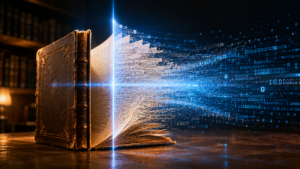
Under an internal effort called Project Panama, which began in early 2024 and was led by a former Google Books executive, Anthropic purchased millions of physical books in bulk from resellers. Using industrial-grade, hydraulic-powered cutting machines, the company sliced the spines off these books, scanned every page with high-speed imaging equipment, and then discarded the now-loose, unbound pages. The stated internal goal, according to an unsealed April 2024 memo, was blunt: to “destructively scan all the books in the world.”
This Wasn’t Hidden — It Came Out Through a Lawsuit
This practice didn’t surface through investigative reporting alone — it became public specifically because Anthropic faced a class-action lawsuit from authors, including Andrea Bartz, Charles Graeber, and Kirk Wallace Johnson, alleging the company also used millions of pirated digital books to train Claude. As part of that legal process, a federal judge ordered internal documents about Project Panama unsealed, which is how the physical book-destruction practice became widely known.
The Legal Outcome Is More Nuanced Than It Sounds
Here’s the detail that surprises most people: Anthropic’s practice of physically destroying legally purchased books after scanning them was specifically found to be legal. In June 2025, federal judge William Alsup ruled that this process — buying a physical copy, digitizing it, and discarding the original — qualified as “transformative fair use” under the first-sale doctrine, since Anthropic wasn’t creating additional copies beyond what it had legitimately purchased. The judge apparently found that permanently destroying the original books, rather than keeping both physical and digital versions, actually strengthened Anthropic’s fair-use defense.
Anthropic’s real legal trouble came from a separate part of the case: the same judge found the company had also saved more than 7 million pirated books into a “central library” not necessarily tied to legitimate training use — and that specific practice led to the record-breaking settlement.
The $1.5 Billion Settlement
Separately from the legal physical book-scanning practice, Anthropic agreed to pay $1.5 billion to settle the piracy-related claims — the largest copyright settlement in US history — working out to roughly $3,000 per book for thousands of affected authors. As part of the settlement, Anthropic is also required to destroy the pirated datasets it had accumulated.
Why Old Books Specifically Are Valuable to AI Companies
Part of what’s driving this practice across the AI industry — not just at Anthropic — is a growing scarcity of clean training data. Books published before roughly 2022 carry particular value because they predate widespread AI-generated text online, meaning they’re free of the risk of an AI model accidentally training on AI-generated content, a problem researchers call “model collapse” over repeated generations. A company called ISBNdb reportedly facilitates bulk orders of up to a million books at a time for AI training purposes, while keeping buyers anonymous.
Anthropic’s Position
Anthropic has maintained a consistent stance throughout: that it’s entitled to train on published material, even when individual authors object, as long as the underlying use qualifies as fair use under copyright law — a position the courts have partially validated (on the physical scanning practice) and partially rejected (on the pirated dataset issue).
Why This Keeps Resurfacing Online
Legally, this story was largely resolved months ago through the court ruling and settlement. What’s driving the renewed viral attention is less about new facts and more about the visceral, tangible image of physically shredding books — including reportedly rare, hard-to-replace editions — which lands very differently with the public than an abstract discussion of “training data” typically does.
Read More:- Netflix Used AI in 300 Movies and Shows — And You Probably Didn’t Notice | Affitronix
Frequently Asked Questions
Is it illegal for AI companies to buy and destroy physical books to train AI models?
No — a federal judge specifically ruled this practice legal under fair use and the first-sale doctrine, since the company owned the physical copies and wasn’t creating unauthorized additional copies.
What did Anthropic actually get in legal trouble for?
Separately, for maintaining a library of more than 7 million pirated (not purchased) digital books not clearly tied to legitimate training use — this led to the $1.5 billion settlement, not the physical book-scanning practice itself.
Are other AI companies doing the same thing?
Reports indicate this practice extends beyond Anthropic, with brokers like ISBNdb offering similar bulk book-buying and destruction services to other AI firms sourcing clean, pre-2022 training data.