A federal appeals court just handed down what’s being called the first ruling of its kind — directly addressing whether an AI agent shopping on your behalf is legally allowed to access a website like Amazon. The answer, at least for now, is yes.
What Started This Fight
Perplexity, the AI search company, built a feature called “Assistant” into its Comet browser that can log into a user’s Amazon account and complete purchases automatically, based on the user’s instructions. Amazon wasn’t happy about this — it sued Perplexity in November 2025, alleging the AI agent accessed customer accounts without Amazon’s authorization and violated federal and California computer-hacking laws. A key detail in the dispute: Perplexity’s agent didn’t identify itself to Amazon’s systems as an AI tool the way it could have, which would have let Amazon detect and block it if it chose to.
In March 2026, a lower court sided with Amazon and issued a preliminary injunction blocking Perplexity’s Comet browser from accessing Amazon.com entirely.
What the Appeals Court Decided
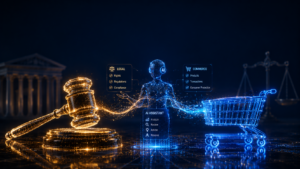
On August 4, 2026, the Ninth Circuit Court of Appeals reversed that decision. The core of the court’s reasoning was surprisingly simple: it’s the user, not Perplexity, who is legally “accessing” Amazon’s systems — Perplexity’s tool is simply carrying out actions the user already authorized, similar to how a web browser itself doesn’t “access” a website independently of the person using it. Because of this, the court found Amazon was unlikely to succeed in proving Perplexity violated the Computer Fraud and Abuse Act (CFAA), a federal anti-hacking law originally passed in 1986 — decades before AI agents existed.
The court specifically noted that the CFAA is fundamentally an anti-hacking statute, and judges should be cautious about stretching its scope to cover new technology it was never written to address.
Why This Ruling Matters Beyond Amazon and Perplexity
This is being described as the first federal appeals court ruling to directly tackle whether AI agents acting on a user’s behalf can be treated as illegally “hacking” a website simply by using it differently than a traditional browser. As AI shopping assistants, browsing agents, and similar tools become more common, this case sets an early legal framework other courts may look to when similar disputes arise.
This Isn’t Fully Over Yet
A few important limits are worth understanding here. The ruling only addressed the “access” question at the preliminary injunction stage — it didn’t permanently resolve the full underlying lawsuit, which continues in the lower court. Amazon’s separate trademark-related claims against Perplexity also remain active and unaffected by this specific ruling. Legal experts have also cautioned this decision doesn’t mean every AI agent or browser tool is now automatically immune from similar legal claims — the ruling was specifically tied to this case’s facts and this particular legal theory.
What This Means for You
If you use AI shopping or browsing agents, this ruling is a point in favor of those tools continuing to work smoothly across websites like Amazon without being blocked through hacking-law claims. That said, real practical considerations remain — tools like Comet do read information like your open tabs and browsing history to function, so it’s worth understanding what data an AI agent accesses on your behalf, separate from whether that access is legally permitted.
Read More:- AMD Buys a Startup That Builds AI Chips 48x Faster Than Nvidia’s | Affitronix
Frequently Asked Questions
Does this ruling mean AI agents can now access any website freely?
No — the court’s ruling was specifically limited to this case and this particular legal theory (the CFAA’s “access” provision); it doesn’t grant blanket immunity to all AI agents everywhere.
Is the Amazon vs. Perplexity lawsuit completely over?
No — this ruling only addressed a preliminary injunction; the underlying case, including Amazon’s separate trademark claims, continues in the lower court.
Why does this ruling matter if I don’t use Perplexity specifically?
It’s the first federal appeals court decision addressing how old computer-hacking laws apply to modern AI agents, which could influence how similar disputes are decided for other AI tools going forward.