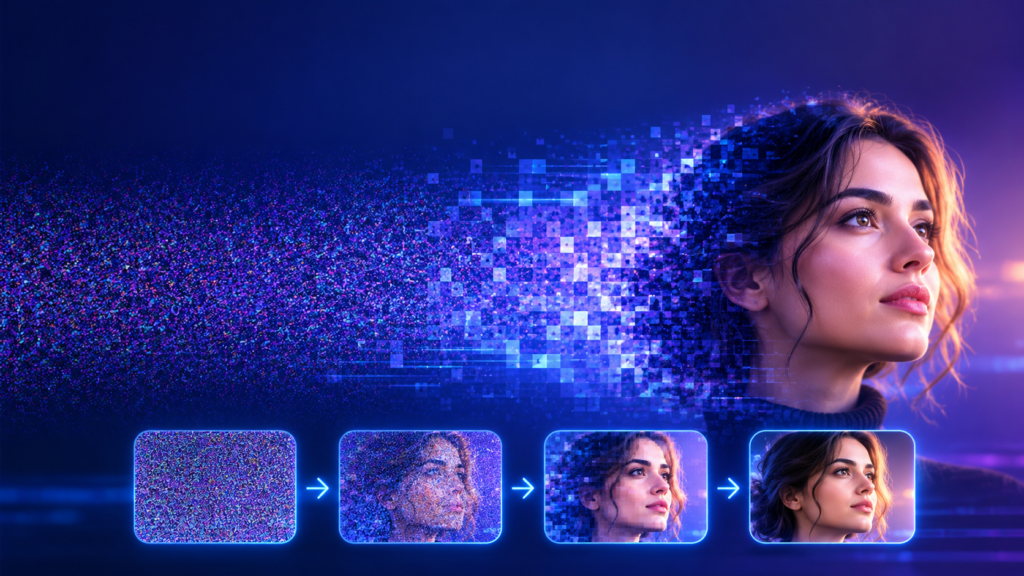
Artificial Intelligence (AI) is technology that enables computers and machines to perform tasks that normally require human intelligence, such as understanding language, recognizing patterns, making predictions, solving problems, and generating content. AI systems can range from simple rule-based programs to advanced machine-learning and generative-AI systems.

Quick Summary
- AI allows machines to perform tasks associated with human intelligence.
- Machine learning (ML) is a major approach used to build AI systems that learn patterns from data.
- Deep learning uses neural networks with multiple layers to process complex patterns.
- Generative AI can create new content such as text, images, audio, and video.
- AI is already used in search, recommendations, translation, fraud detection, healthcare, transportation, customer service, and many other areas.
- AI can be useful and powerful, but its outputs can also be inaccurate or biased, so important decisions require appropriate human oversight.
What Is Artificial Intelligence?
Artificial intelligence is a broad field of technology focused on building machine-based systems that can produce outputs such as predictions, recommendations, or decisions based on human-defined objectives. NIST uses a similar definition in its AI terminology and risk-management guidance.
In simple terms, AI teaches computers to handle certain tasks that would normally require human intelligence.
For example, an AI system might identify an object in a photograph, translate a sentence, recommend a product, detect suspicious activity, summarize a document, or generate an answer to a question.
AI does not necessarily work exactly like the human brain. Different AI systems use different techniques, algorithms, data, and levels of automation to accomplish specific tasks.
How Does Artificial Intelligence Work?
At a basic level, an AI system receives information, processes it using algorithms and models, and produces an output.
A simplified AI workflow looks like this:
- Collect data: The system receives relevant examples or information.
- Train or configure the system: Algorithms or models are developed to identify useful patterns or follow defined rules.
- Test the system: Developers evaluate how well it performs on data or situations it has not previously encountered.
- Give it an input: A user, application, sensor, or another system provides new information.
- Generate an output: The AI produces a prediction, recommendation, classification, decision, or generated response.
- Evaluate and improve: Developers can monitor performance and update the system when necessary.
Machine-learning systems are different from traditional programs because the behavior of a trained model can be learned from data rather than being completely specified through manually written rules.
What Is Machine Learning?
Machine learning is a major approach to artificial intelligence in which models learn patterns from data to make predictions or decisions. Instead of programming every possible rule manually, developers train a model using examples so it can identify patterns and apply what it learned to new data.
Consider an email spam filter.
A traditional rules-based system might look for manually specified words or patterns. A machine-learning system can instead be trained using examples of spam and legitimate emails and learn patterns associated with each category.
Machine learning is therefore one of the technologies that helps make modern AI systems flexible enough to handle complicated real-world problems.
What Is Deep Learning?
Deep learning is a specialized form of machine learning that uses neural networks with multiple layers to process complex patterns.
These networks can be particularly useful for tasks involving images, speech, language, and other large or complicated datasets. IBM describes neural networks as interconnected layers of nodes that process and analyze complex data.
You can think of the relationship this way:
Artificial Intelligence → Machine Learning → Deep Learning
Not every AI system uses deep learning, but deep-learning methods are important components of many modern AI applications.
What Is Generative AI?
Generative AI is a type of AI designed to create new content rather than simply classify or predict information.
Depending on the system, generative AI can produce:
- Text
- Images
- Audio
- Video
- Computer code
- Summaries
- Other forms of digital content
Chatbots and AI content-generation tools are common examples of generative AI.
Generative AI is built using underlying AI and machine-learning technologies, including deep-learning approaches. IBM notes that generative AI has become a major focus of modern AI development because of its ability to create original content across multiple formats.
What Are Some Examples of Artificial Intelligence?
AI is already part of many products and services people use every day.
Search Engines
Search systems can use AI and machine-learning techniques to understand queries and provide relevant results.
Recommendation Systems
Streaming platforms, shopping websites, and social networks can use machine-learning models to recommend content or products based on patterns in user behavior.
Voice Assistants
AI can process spoken language, interpret requests, and produce responses or perform actions.
Fraud Detection
Financial systems can analyze transaction patterns and identify activity that may require additional investigation.
Image Recognition
Computer-vision systems can analyze images and identify objects, patterns, or other visual information.
Translation
AI-based language systems can translate text between languages and increasingly handle complex language-related tasks.
Generative AI
Modern generative-AI systems can create text, images, code, audio, and other content based on user instructions.
These examples demonstrate that AI is not one single technology or application. It is an umbrella term covering many different approaches and systems.
Artificial Intelligence vs Traditional Software
The simplest difference is that traditional software often follows explicitly programmed instructions, while many modern AI systems can learn patterns from data.
| Feature | Traditional Software | AI / Machine Learning |
|---|---|---|
| Main approach | Explicit instructions | Patterns learned from data or rules |
| Adaptability | Usually requires code changes | Models can be retrained or updated |
| Typical output | Programmed result | Prediction, classification, recommendation or generation |
| Example | Calculator | Spam detection |
| Data importance | Often secondary | Frequently central |
| Complexity | Rules can become difficult to maintain | Models can handle complex patterns but may be harder to interpret |
The distinction is not absolute. AI systems are still software, and some AI systems use explicitly programmed rules. Modern AI often combines software engineering, algorithms, statistical methods, data, and trained models.
Why Is AI So Important Today?
AI matters because it can automate or accelerate tasks that previously required substantial human effort.
Businesses can use AI to analyze information, automate repetitive work, assist employees, improve customer experiences, and develop new products. Consumers can use AI for education, writing, research, creativity, translation, and everyday productivity.
At the same time, AI introduces challenges involving reliability, privacy, security, fairness, transparency, and other risks. NIST’s AI Risk Management Framework specifically emphasizes the need to manage AI risks and improve the trustworthiness of AI systems.
Is Artificial Intelligence the Same as Human Intelligence?
No. Artificial intelligence and human intelligence are not the same thing.
AI systems can perform specific tasks extremely well, but their capabilities depend on how they were designed, trained, evaluated, and deployed.
Humans can apply broad contextual understanding, common sense, social experience, physical experience, and judgment across many different situations. AI systems may instead be highly capable within particular tasks while still making unexpected mistakes.
This is why an AI-generated answer should not automatically be treated as correct simply because it sounds confident.
What Are the Risks of Artificial Intelligence?
AI can provide significant benefits, but it also introduces risks.
Potential problems include:
- Incorrect or misleading outputs
- Bias in data or model behavior
- Privacy concerns
- Security vulnerabilities
- Lack of transparency
- Overreliance on automated decisions
- Misuse of generated content
- Errors in high-impact applications
NIST notes that AI risks can arise from both technical characteristics and the social context in which AI systems are developed and used. Its AI Risk Management Framework is designed to help organizations address these risks throughout the AI lifecycle.
For beginners, the most important lesson is simple: AI is a powerful tool, not an automatic source of truth.
How Can Beginners Start Learning AI?
You do not need to become a programmer to understand the basics of AI.
A practical learning path is:
- Learn basic AI terminology: Understand AI, machine learning, deep learning, generative AI, models, and datasets.
- Try AI tools: Use an AI chatbot or image-generation tool to understand what modern systems can do.
- Learn how AI produces outputs: Understand the relationship between data, models, prompts, predictions, and generated content.
- Learn the limitations: Study hallucinations, bias, privacy, security, and reliability.
- Explore practical applications: Try AI for writing, research, coding, marketing, education, or productivity.
- Learn deeper technical concepts: If you want a career in AI, continue into statistics, Python, machine learning, neural networks, and model development.
The best way to understand AI is to combine basic theory with practical experimentation.
What Is the Future of Artificial Intelligence?
Artificial intelligence is continuing to evolve rapidly, particularly in areas such as generative AI, multimodal systems, automation, robotics, and AI-assisted software development.
However, predicting exactly what AI will look like years from now is difficult because models, products, regulations, research methods, and deployment practices continue to change.
NIST’s AI guidance itself is designed as an evolving resource, and NIST states that its AI Risk Management Framework is being revised as the technology and standards landscape develop.
For beginners, the most useful approach is therefore not trying to predict every future AI breakthrough. It is learning the fundamentals and understanding how to evaluate AI tools responsibly.
Final Thoughts
Artificial intelligence is technology that enables machine-based systems to perform tasks involving predictions, recommendations, decisions, pattern recognition, language, and content generation.
The easiest way to understand AI is to remember the relationship between its major concepts: AI is the broad field, machine learning is a major way of building AI systems, deep learning is a machine-learning approach based on neural networks, and generative AI focuses on creating new content.
You do not need an advanced technical background to start learning artificial intelligence. Begin with the concepts, experiment with real AI tools, understand their limitations, and gradually explore the technical side if you want to go deeper.
Important: AI technology, terminology, capabilities, and best practices are changing quickly. This article should be reviewed periodically as the technology evolves.
Read More:- Free vs Paid AI Tools: What’s Worth Paying For?
Frequently Asked Questions
What is artificial intelligence in simple words?
Artificial intelligence is technology that allows computers and machines to perform tasks that normally require human intelligence. These tasks can include understanding language, recognizing patterns, making predictions, solving problems, and generating content.
How does artificial intelligence work?
AI systems process information using algorithms and models. Many modern AI systems learn patterns from large amounts of data and use those patterns to produce predictions, recommendations, classifications, or generated content.
What is the difference between AI and machine learning?
AI is the broader field of creating systems that perform tasks associated with intelligence. Machine learning is one major approach to AI where systems learn patterns from data rather than relying entirely on manually programmed rules.
What is generative AI?
Generative AI is a type of artificial intelligence that can create new content from user instructions or other inputs. Depending on the system, it can generate text, images, audio, video, or computer code.
Is AI the same as human intelligence?
No. AI systems can perform specific tasks extremely well, but they do not necessarily possess the broad understanding, experience, common sense, and judgment associated with human intelligence.
Can beginners learn artificial intelligence?
Yes. Beginners can start by learning basic AI terminology and experimenting with everyday AI tools. Programming, mathematics, statistics, and machine-learning concepts can be added gradually for people who want deeper technical knowledge.