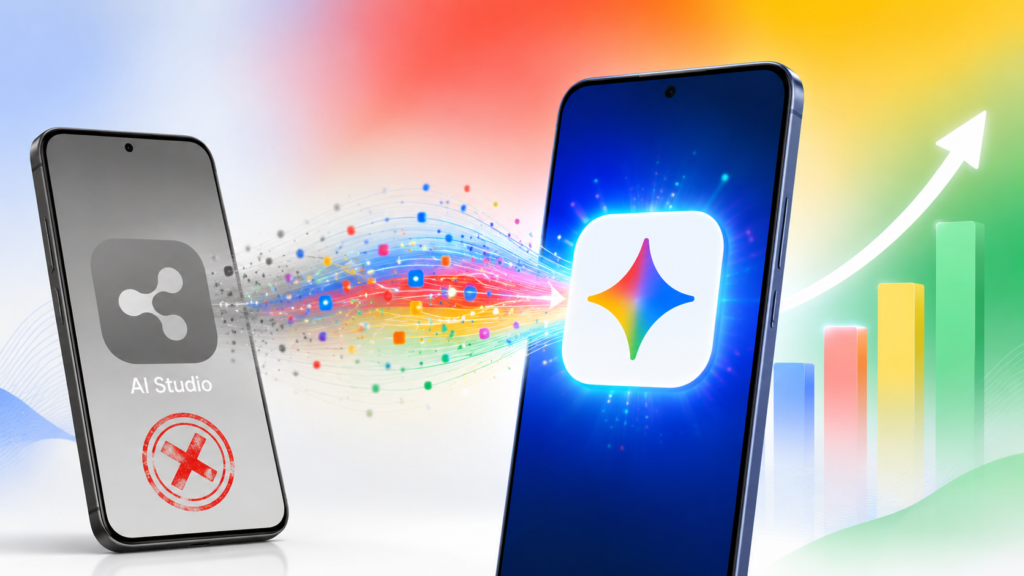
Google is buying something from a bankrupt airline that has nothing to do with airplanes.
The company has agreed to pay $10 million for Spirit Airlines’ internal business data, with plans to use the information for product development and to help train its artificial intelligence models.

The deal was revealed through Spirit Airlines’ bankruptcy proceedings and highlights a rapidly growing trend in the AI industry: valuable training data is no longer limited to books, websites and publicly available information.
Real-world corporate data is becoming a valuable AI asset.
The dataset reportedly includes employee emails, Microsoft Teams messages, spreadsheets, calendars, documents and operational information.
Google’s purchase is subject to approval by a U.S. bankruptcy court.
What Did Google Buy From Spirit Airlines?
Google is not buying Spirit Airlines itself.
Instead, it is acquiring a collection of internal business data and software assets from the airline’s bankruptcy estate.
The package includes information generated during Spirit’s years of operations.
According to reporting, the data includes:
- Employee emails
- Microsoft Teams messages
- Calendars
- Spreadsheets
- Internal documents
- Marketing information
- Productivity data
- Operations data
- Business workflows
- Software and code-related assets
The sheer scale is significant.
Reports say the dataset contains roughly 100 million emails and 500 million Microsoft Teams messages.
How Much Did Google Pay?
Google agreed to pay $10 million for the data.
The transaction came through a bankruptcy auction after Spirit Airlines ceased operations.
Google was not the only company interested.
AI data company Mercor reportedly submitted a $7.5 million bid, but Google ultimately won the auction with its higher offer.
That competition is significant because it demonstrates how valuable companies now believe proprietary corporate data can be.
A few years ago, an airline’s internal emails and business workflows would have primarily been viewed as corporate records.
Today, the same information can potentially become an AI-development asset.
Why Does Google Want Spirit Airlines’ Data?
Google says it plans to use the data for product development and AI-model training.
The value comes from the fact that the dataset represents real-world business activity.
AI models can learn from many types of information.
But corporate data can contain something that ordinary internet text often lacks:
real operational context.
An airline’s internal systems contain information about how a complicated business actually works.
That could include:
- Scheduling
- Operations
- Customer-service workflows
- Internal communication
- Business decisions
- Software systems
- Marketing processes
- Productivity
- Logistics
- Financial operations
For AI developers, that kind of information can be extremely useful.
Why Is Corporate Data Valuable for AI?
The AI industry has spent years training models on massive amounts of publicly available information.
But there is a growing problem.
The supply of easily accessible, high-quality public training data is limited.
Companies therefore have increasing incentives to find other sources.
Corporate data is attractive because it contains information generated inside real organizations.
It can show how people actually:
- Solve problems
- Communicate
- Make decisions
- Operate software
- Manage workflows
- Respond to unexpected situations
This makes enterprise datasets potentially valuable for building AI systems that understand real-world work.
Is Google Buying Spirit Airlines’ Customer Data?
This is one of the most important details of the deal.
Google says the purchase does not include customer information or personally identifiable information.
The data is expected to be de-identified before the transaction is completed.
That means the headline should not be interpreted as Google simply buying a database of Spirit passengers.
The deal is focused on internal business information rather than a straightforward sale of customer profiles.
What About Employee Emails?
Employee communications are reportedly part of the dataset.
That includes internal emails and Microsoft Teams messages.
This creates an interesting privacy question.
Employees may naturally think of workplace conversations as personal communications, particularly when they involve routine discussions between colleagues.
Legally and contractually, however, workplace communications can be treated as company records depending on the organization’s policies and applicable law.
The Spirit transaction demonstrates how long those records can potentially survive.
Even after a company stops operating, its digital records can remain valuable.
How Many Messages Are Included?
The reported numbers are enormous.
The dataset includes approximately:
100 million emails
and
500 million Microsoft Teams messages.
That is an extraordinary amount of workplace communication.
For an AI developer, the value isn’t necessarily in any individual email.
The value can come from the patterns across millions of interactions.
Those patterns can potentially provide insight into how organizations communicate and solve operational problems.
What Makes Real-World Business Data Different?
Public internet data often shows what people publish.
Corporate data can show what people actually do inside organizations.
That difference matters.
For example, an online article might explain how airline operations are supposed to work.
Internal corporate records could show how employees actually deal with:
- Delays
- Scheduling problems
- Customer complaints
- Operational disruptions
- Resource shortages
- Internal approvals
- Software issues
That kind of messy, real-world information can be difficult to create artificially.
AI Models Need More Than Clean Data
AI developers often want clean, structured datasets.
But there is another type of valuable information:
messy data.
Real businesses rarely operate with perfectly structured information.
Employees make mistakes.
They write informal messages.
They use abbreviations.
They change plans.
They communicate across departments.
They solve unexpected problems.
That messiness can provide useful signals for AI systems designed to operate in the real world.
Could This Data Improve Gemini?
Google did not publicly state that every part of the Spirit dataset will be used to train Gemini specifically.
The company has said the data will be used for product development and AI-model training.
So it is safer to describe the acquisition as supporting Google’s broader AI development rather than claiming that the entire dataset is directly going into Gemini’s training corpus.
This distinction matters because a dataset can be used in multiple stages of AI development.
It could support:
- Model training
- Evaluation
- Product development
- Simulation
- Testing
- Research
- Enterprise AI tools
Google Is Not Buying Spirit Airlines
Another important clarification:
Google is not acquiring the airline.
Spirit Airlines ceased operations and entered bankruptcy proceedings.
The airline’s remaining assets are being handled through the bankruptcy process.
The data is simply one of the assets being sold.
This makes the transaction unusual.
An airline’s planes, airport assets and other physical property may have obvious buyers.
But its digital records have also become a valuable asset.
Why Is the Deal Happening Through Bankruptcy?
Spirit Airlines has been selling assets as part of its bankruptcy process.
When a company shuts down, its assets can include much more than physical property.
There may also be:
- Software
- Databases
- Intellectual property
- Contracts
- Customer relationships
- Internal records
- Business processes
- Corporate communications
The Spirit case shows that digital information can become an important part of the liquidation process.
Google Had Competition
Google wasn’t the only company that saw value in Spirit’s data.
Mercor, an AI data company, reportedly offered $7.5 million.
Google ultimately increased its offer to $10 million and won the auction.
The competing bid is arguably one of the most interesting parts of the story.
It suggests that companies specializing in AI data are willing to pay millions for proprietary datasets containing real-world business information.
Why Would an AI Data Company Want Airline Records?
AI models need diverse examples.
A dataset from an airline can provide information that may be difficult to reproduce from general web content.
For example, airline operations involve complex interactions between:
- Employees
- Customers
- Scheduling systems
- Aircraft
- Airports
- Vendors
- Regulations
- Operations teams
- Customer-service departments
That complexity makes airline data potentially useful for AI systems designed to understand business workflows.
Is This a New AI Data Market?
It could be.
The Spirit deal is another sign that private corporate data is becoming a commodity in the AI economy.
Companies may increasingly look at their internal records and ask:
“Could this data be licensed or sold for AI development?”
That could create a new market for enterprise datasets.
Instead of AI companies relying almost entirely on public internet information, they could purchase specialized datasets from businesses.
What Other Types of Corporate Data Could Become Valuable?
The same logic could apply to many industries.
Potentially valuable datasets could come from:
- Banks
- Hospitals
- Retailers
- Logistics companies
- Manufacturers
- Telecom companies
- Insurance companies
- Hotels
- Software companies
- Automotive businesses
- Airlines
Each industry generates unique operational data.
A large AI model trained on diverse business workflows could potentially become better at understanding how real organizations operate.
Why This Matters for AI Training
AI development is entering a phase where data quality may matter as much as data quantity.
Early AI systems could benefit simply from enormous amounts of internet text.
More advanced systems increasingly need specialized information.
The challenge is finding datasets that are:
- High quality
- Diverse
- Legally usable
- Representative of real-world situations
- Large enough for modern AI systems
- Properly processed
Corporate datasets potentially check several of these boxes.
The Privacy Question
The biggest concern surrounding deals like this is privacy.
Even when data is de-identified, large datasets can raise questions about whether individuals can ever be completely separated from their digital history.
A dataset containing hundreds of millions of workplace messages is especially complicated.
There may be:
- Personal references
- Opinions
- Workplace conflicts
- Informal conversations
- Internal information
- Sensitive business discussions
That is why the handling and de-identification process matters.
What Does De-Identified Mean?
De-identification generally means removing or modifying information that can directly identify individuals.
Examples can include:
- Names
- Email addresses
- Phone numbers
- Identification numbers
- Other direct identifiers
But de-identification does not automatically mean that every privacy concern disappears.
Large datasets can sometimes contain indirect clues that make individuals easier to identify.
That is why the specific safeguards used to process the data are important.
Does This Mean Google Can Train AI on Any Company Data?
No.
The Spirit transaction does not establish a general rule that companies can freely sell or use any workplace data for AI training.
The legal rights associated with data can vary depending on:
- Contracts
- Employment agreements
- Privacy laws
- Data-protection regulations
- Intellectual-property rights
- Bankruptcy law
- Corporate policies
- Jurisdiction
The specific Spirit transaction is being handled through a U.S. bankruptcy process and remains subject to court approval.
The Court Still Has to Approve the Sale
The deal is not simply a completed private transaction.
A U.S. bankruptcy judge is expected to consider approval of the sale.
Reuters reported that the hearing was scheduled for August 19, 2026.
That means the current headline should technically be understood as:
Google has agreed to acquire the data, pending the bankruptcy court process.
Why the Spirit Deal Could Be a Turning Point
The interesting part isn’t only the $10 million price tag.
It’s what the transaction says about the future of AI.
AI companies are increasingly searching for data that provides something the public web cannot easily provide.
That could be:
- Real business workflows
- Proprietary operational knowledge
- Specialized communications
- Industry-specific software
- Internal decision-making patterns
Companies that own this information could eventually find themselves sitting on valuable AI assets.
Corporate Data Could Become a New Revenue Stream
Imagine a company that has operated for 20 years.
It may have accumulated:
- Millions of emails
- Customer-service records
- Internal documents
- Software code
- Operational logs
- Training materials
- Business processes
Historically, much of that information was treated as corporate history.
In the AI era, some of it could potentially become a dataset with economic value.
That changes how companies may think about data ownership.
Could Bankrupt Companies Sell Their Data to AI Companies?
The Spirit case demonstrates that this is possible within a bankruptcy process, subject to applicable law and court approval.
That could create an interesting new category of asset sales.
When a company fails, buyers may not just compete for:
planes, factories or real estate.
They could also compete for:
data, software and operational knowledge.
That is a major shift in how digital assets are valued.
What This Means for Employees
The deal also raises an uncomfortable issue for workers.
Employees may leave a company expecting their work accounts and messages to disappear eventually.
But corporate records can survive for years.
If the company later sells those records as part of an asset transaction, the data can potentially outlive both the company and the employee’s relationship with it.
That makes workplace data policies increasingly important.
Should Employees Be More Careful With Work Accounts?
Employees should generally assume that communications made through company systems can be retained according to the employer’s policies.
That includes:
- Work email
- Company messaging systems
- Shared documents
- Internal collaboration platforms
- Corporate devices
The Spirit case is a dramatic reminder that digital records can have a much longer lifespan than people expect.
Why AI Companies Want Operational Knowledge
Large language models are good at generating text.
But increasingly, AI companies want systems that can do things.
AI agents may need to understand:
- Business processes
- Workflows
- Exceptions
- Decisions
- Human communication
- Operational constraints
Real corporate data can provide examples of these patterns.
That makes enterprise datasets potentially useful for the next generation of AI agents.
The AI Data Race Is Expanding
The AI race is often described as a competition for GPUs.
That is only part of the picture.
Companies also compete for:
- Researchers
- Compute
- Energy
- Models
- Users
- Distribution
- Data
As public data becomes harder to acquire or less differentiated, proprietary datasets could become increasingly important.
Google’s Spirit purchase is a clear example of that trend.
Will Other Companies Follow Google?
It would not be surprising.
If companies see that proprietary business data can improve AI systems, more deals could emerge.
AI companies may seek datasets from industries such as:
- Healthcare
- Finance
- Manufacturing
- Transportation
- Retail
- Telecommunications
Some companies may sell data.
Others may license it.
Some could create partnerships where AI companies use the data without acquiring ownership.
What Could the Future Look Like?
A new data economy could emerge around AI.
Businesses could categorize their information into different groups:
Public data
Information anyone can access.
Private operational data
Information created internally.
Licensed AI data
Information explicitly made available to AI developers.
Restricted data
Information that cannot be used for AI training because of legal or privacy limitations.
That kind of classification could become a normal part of corporate data management.
The Bigger Privacy Debate
The Spirit deal raises a larger question:
Who owns the digital history created inside a company?
Employees create many of the messages.
Companies own the systems.
Customers may be mentioned in the records.
Regulators may impose restrictions.
AI companies want access to the information.
Those interests do not always align.
The debate over corporate AI training data is therefore likely to become more complicated as the market grows.
What This Means for the AI Industry
The Google-Spirit deal demonstrates that AI development is increasingly moving beyond publicly available datasets.
The next generation of models may be built using a mixture of:
- Public information
- Licensed content
- Synthetic data
- Proprietary corporate data
- Specialized industry datasets
- Real-world operational records
That could make AI systems more useful in specific professional environments.
But it also creates new questions around privacy, ownership and consent.
Bottom Line
Google has agreed to pay $10 million for Spirit Airlines’ internal business data, with the stated goal of using the information for product development and AI-model training.
The dataset reportedly includes around 100 million emails and 500 million Microsoft Teams messages, along with documents, calendars, spreadsheets, operational information and other business data.
Google says customer information and personally identifiable information are excluded, with the data to be de-identified before the sale is completed.
The deal still requires bankruptcy-court approval.
But the bigger story goes beyond Spirit Airlines.
Google’s purchase shows that real-world corporate data is becoming an increasingly valuable resource for AI development.
As AI models become more capable, the companies that control high-quality operational data may discover that their digital archives are worth far more than they once imagined.
Read More:- Google’s A2A AI Agent Protocol Moves to New Foundation as Agentic AI Race Accelerates
FAQ:-
What did Google buy from Spirit Airlines?
Google agreed to acquire Spirit Airlines’ internal business data and related software assets through the airline’s bankruptcy process. The dataset reportedly includes emails, Microsoft Teams messages, documents, calendars, spreadsheets and operational information.
How much did Google pay for Spirit Airlines’ data?
Google agreed to pay $10 million for the dataset. AI data company Mercor reportedly made a competing $7.5 million bid.
Will Google use Spirit Airlines data to train AI?
Google says it plans to use the acquired data for product development and training its AI models.
Does the dataset include Spirit Airlines customer information?
Google says the acquisition does not include customer information or personally identifiable information. The data is expected to be de-identified before the sale is completed.
How much data is Google getting?
Reports say the dataset includes approximately 100 million emails and 500 million Microsoft Teams messages, along with other corporate records.
Why is corporate data valuable for AI?
Corporate data contains real-world examples of business workflows, communication, decision-making and operations. This type of information can potentially help AI systems better understand how organizations actually work.
Did Google buy Spirit Airlines?
No. Google is acquiring a collection of Spirit Airlines’ internal data and software assets through the bankruptcy process. It is not buying the airline itself.
Has the Google-Spirit data deal been finalized?
The deal still requires approval through the U.S. bankruptcy process. A court hearing was scheduled for August 19, 2026.
Why did Mercor also want Spirit Airlines’ data?
Mercor, an AI data company, reportedly offered $7.5 million for the dataset. Its interest highlights the growing commercial value of real-world corporate data for AI development.
Could more companies sell their corporate data for AI training?
Potentially. The Spirit transaction could encourage other companies to view proprietary operational data as an AI asset, although privacy, contracts, intellectual-property rights and applicable laws will determine what can actually be sold or licensed.